


Protect your university community, wherever learning takes them
AtlasNXT gives campus security, student services, and university leaders a shared view of incidents and people. Send targeted alerts, request welfare updates, and coordinate a response across teaching sites, residences, and field trips.
One response across your campus community
A university operates around the clock. Bring reports, communications, and assigned actions into one place, so the teams responding can work from the same facts.

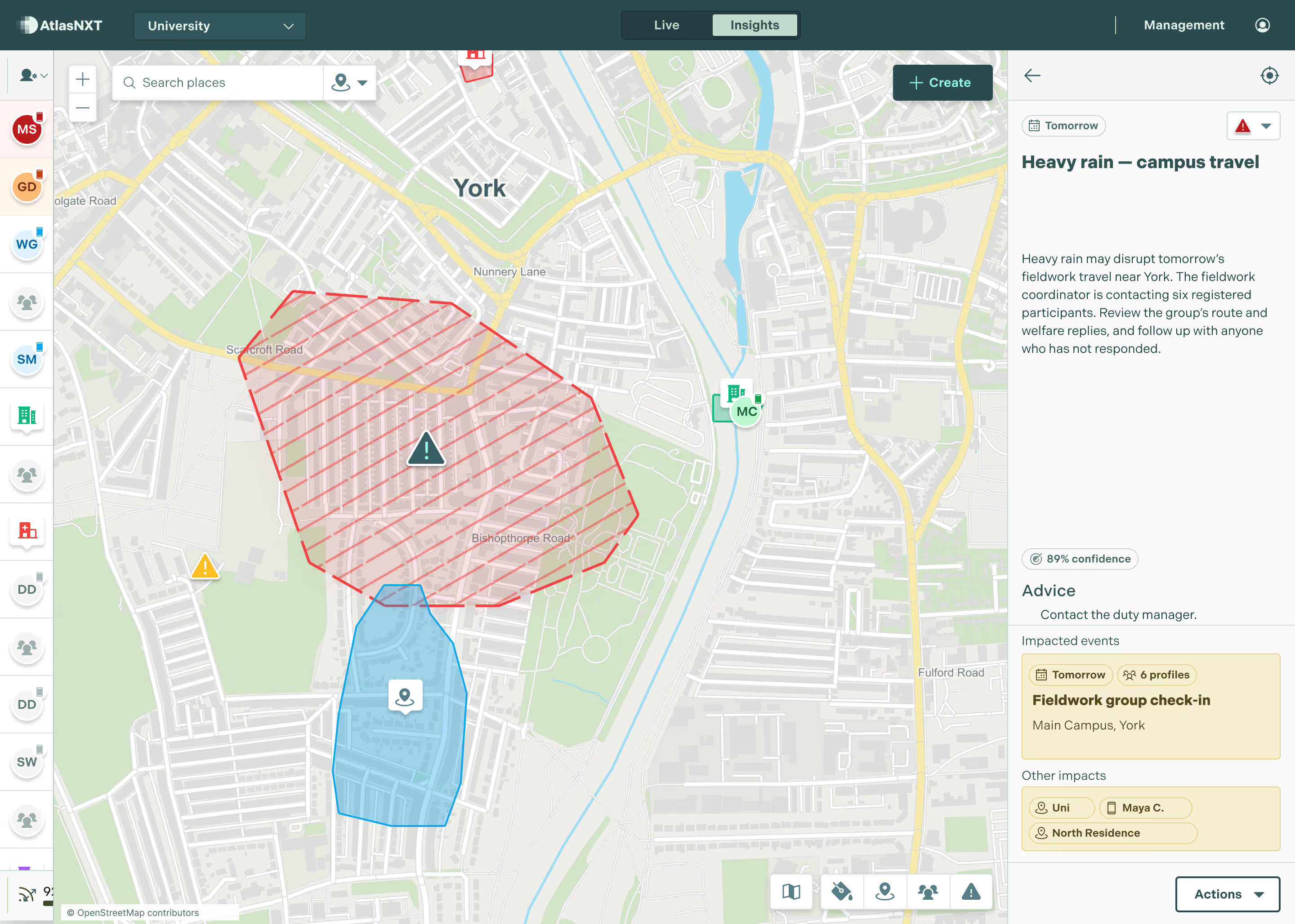
Define areas around campuses and residences. Use location and groups to direct relevant instructions to the people affected.

Check contact readiness before an incident. Reach enrolled staff and students through the available channels, including push, SMS, voice, and email.

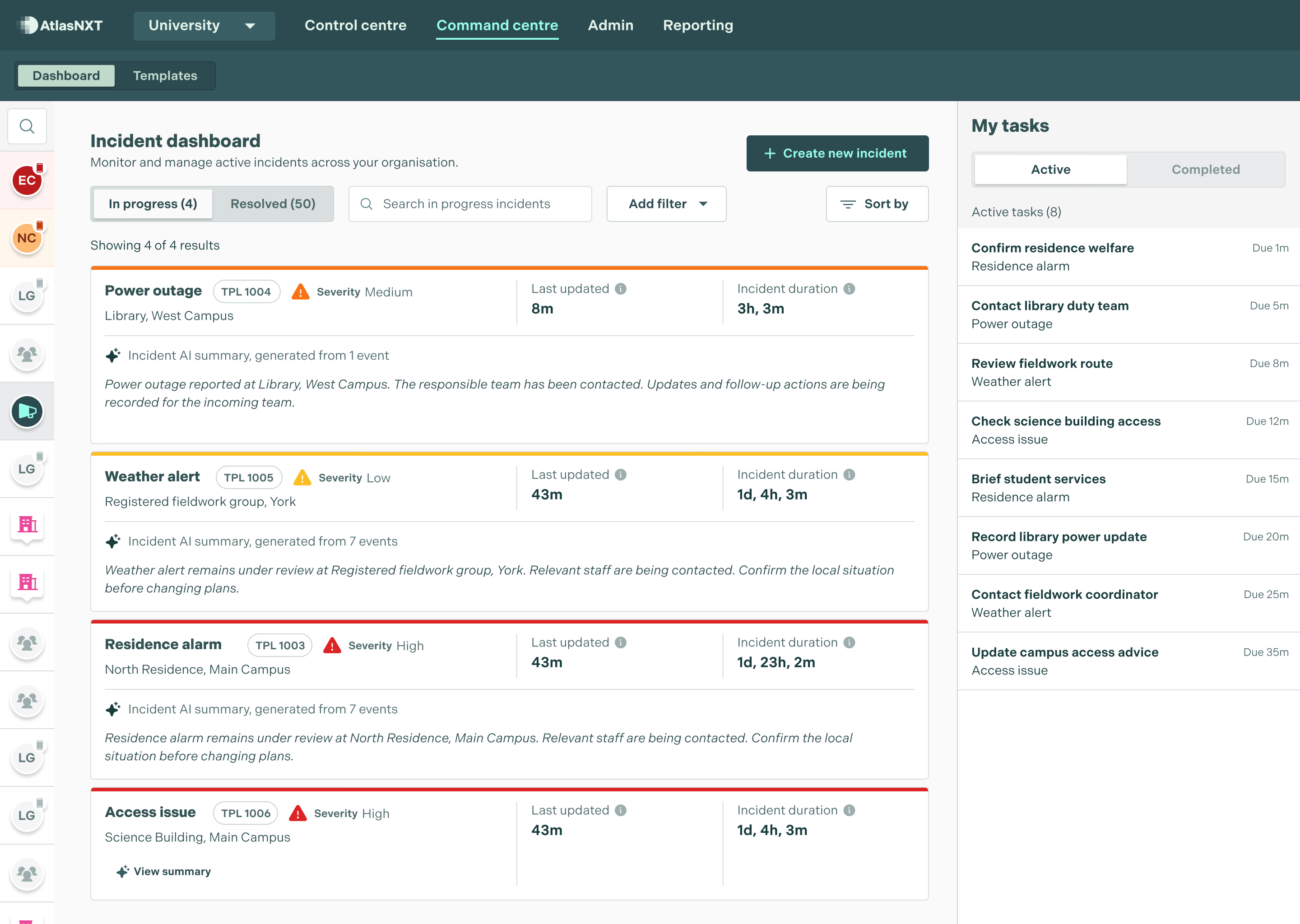
Capture reports, assign tasks, and keep updates together. Give the next shift a clear account of the response.

Request check-ins during disruption or off-site activity. Review replies and identify people who still need follow-up.
Clear instructions when the campus needs answers
An incident in a residence may need a different response from one in a laboratory or teaching building. Security, estates, and student services each hold part of the picture. Separate inboxes and phone calls make it harder to establish what has happened and who needs help.
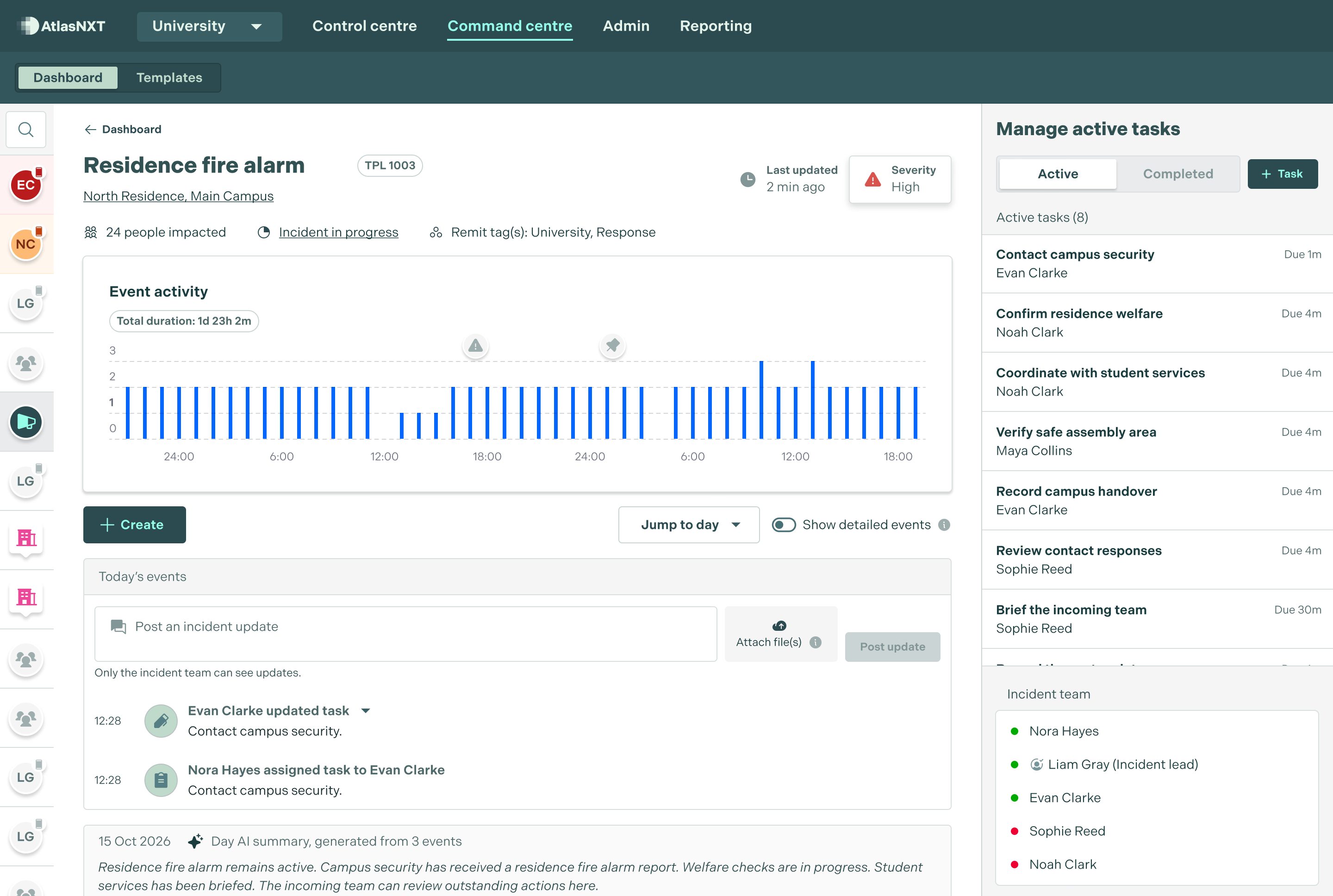
AtlasNXT brings those teams into one incident workspace. Capture the initial report, assign actions to named people, and record updates as the response develops. Authorised colleagues can see current information without waiting for another briefing.
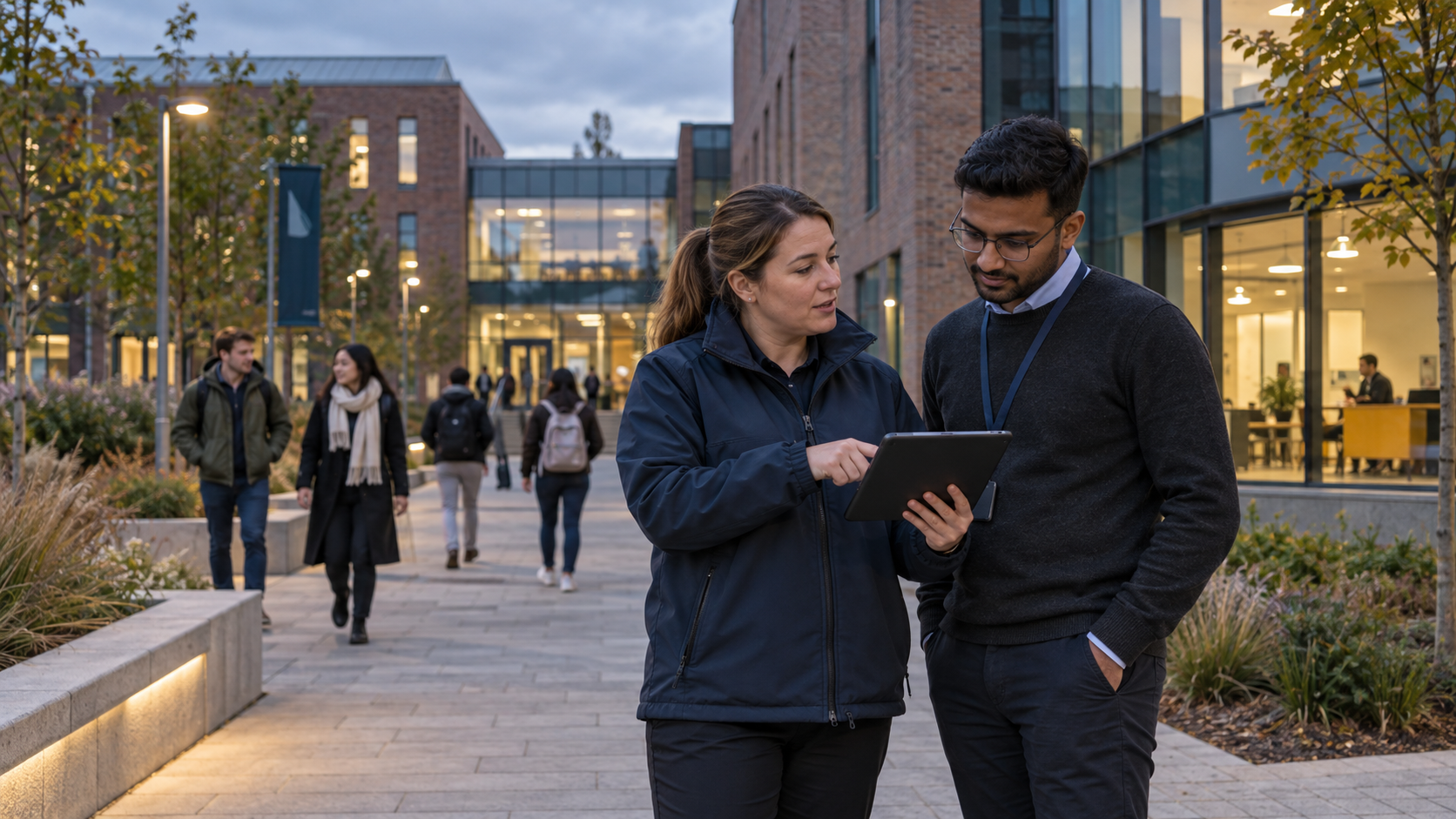
Send instructions to an affected campus, residence, or registered group. Ask people to confirm their welfare and follow up with those who have not replied. The Mobile Operator App lets authorised staff monitor and coordinate the response whilst moving around the site.
The same approach supports fieldwork and university travel. See shared live or last known locations, contact the group, and keep a record of decisions.


From a campus incident to a field trip
Connect the place, the people, and the response. Give each group instructions relevant to its situation, and keep track of replies as conditions change.


Keep the right teams involved
Let campus teams handle local incidents while authorised university leaders see the wider picture. Keep reports and handovers connected to the response.




Further reading
Walk through a residence incident or fieldwork scenario. See how your teams can contact people, review welfare responses, and coordinate the next action.