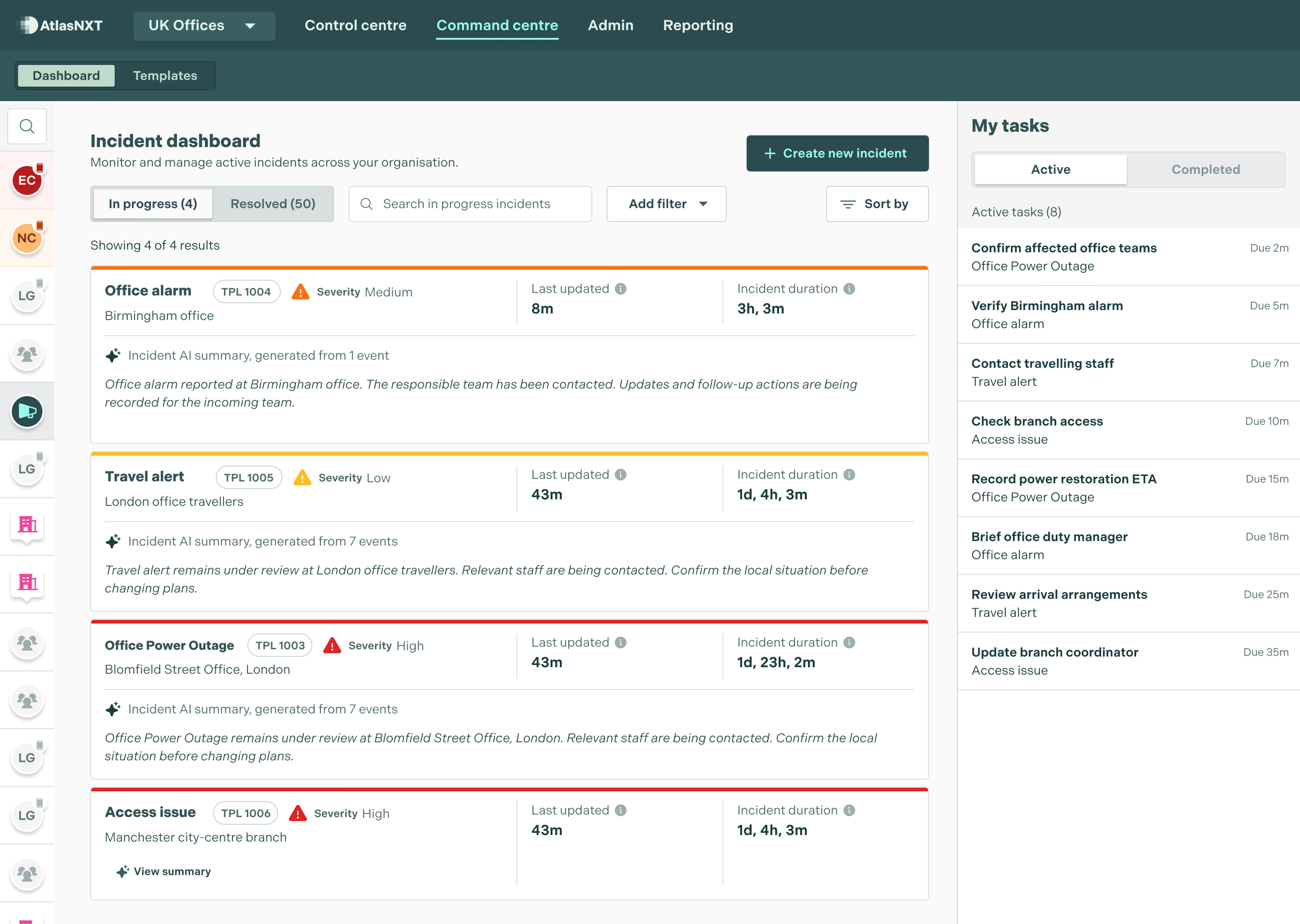
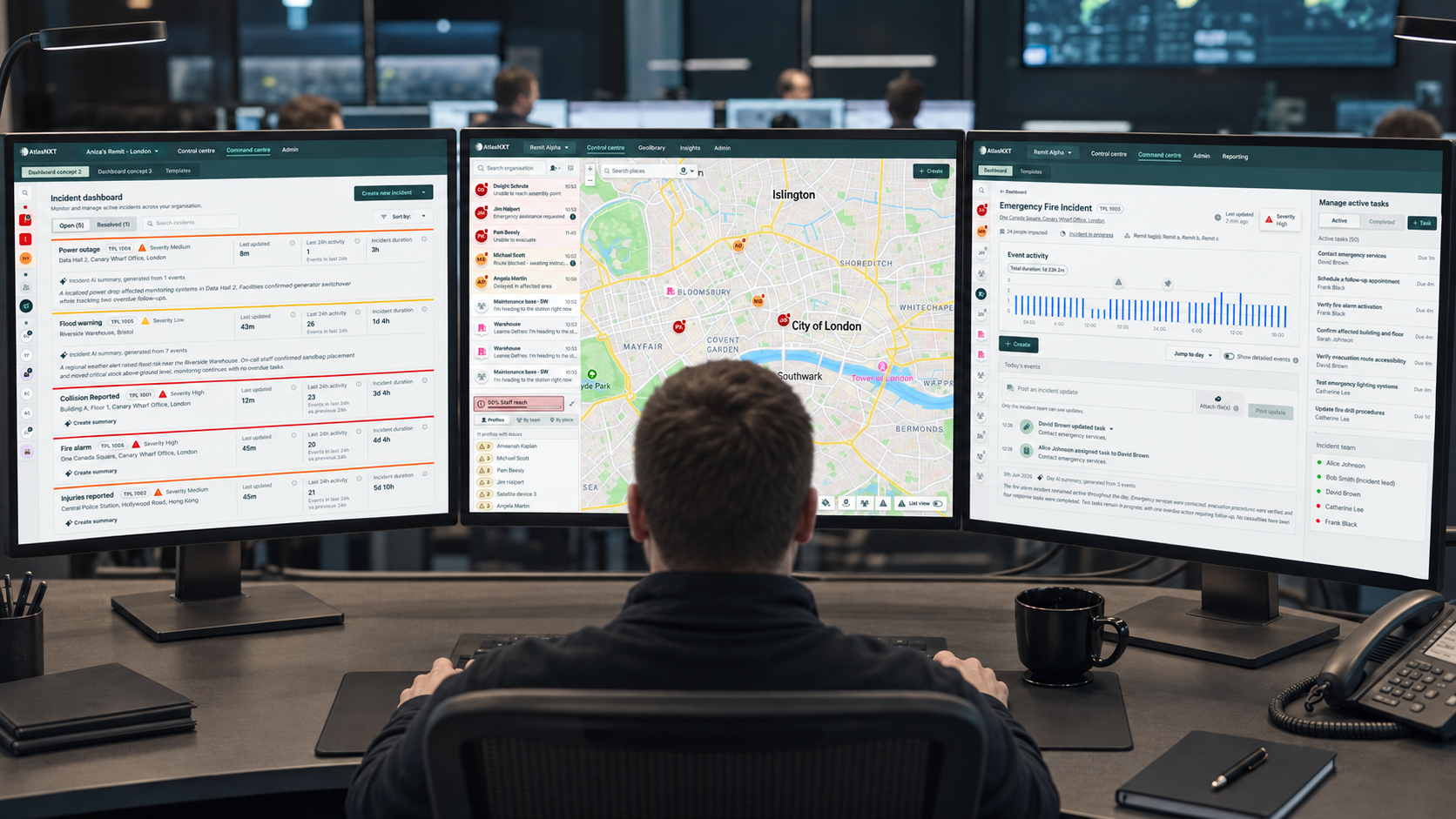
AtlasNXT gives security, resilience, and operations teams a shared view of incidents, locations, and people. Coordinate your response to disruption, send targeted alerts, and keep a clear record across offices, branches, and travelling staff.
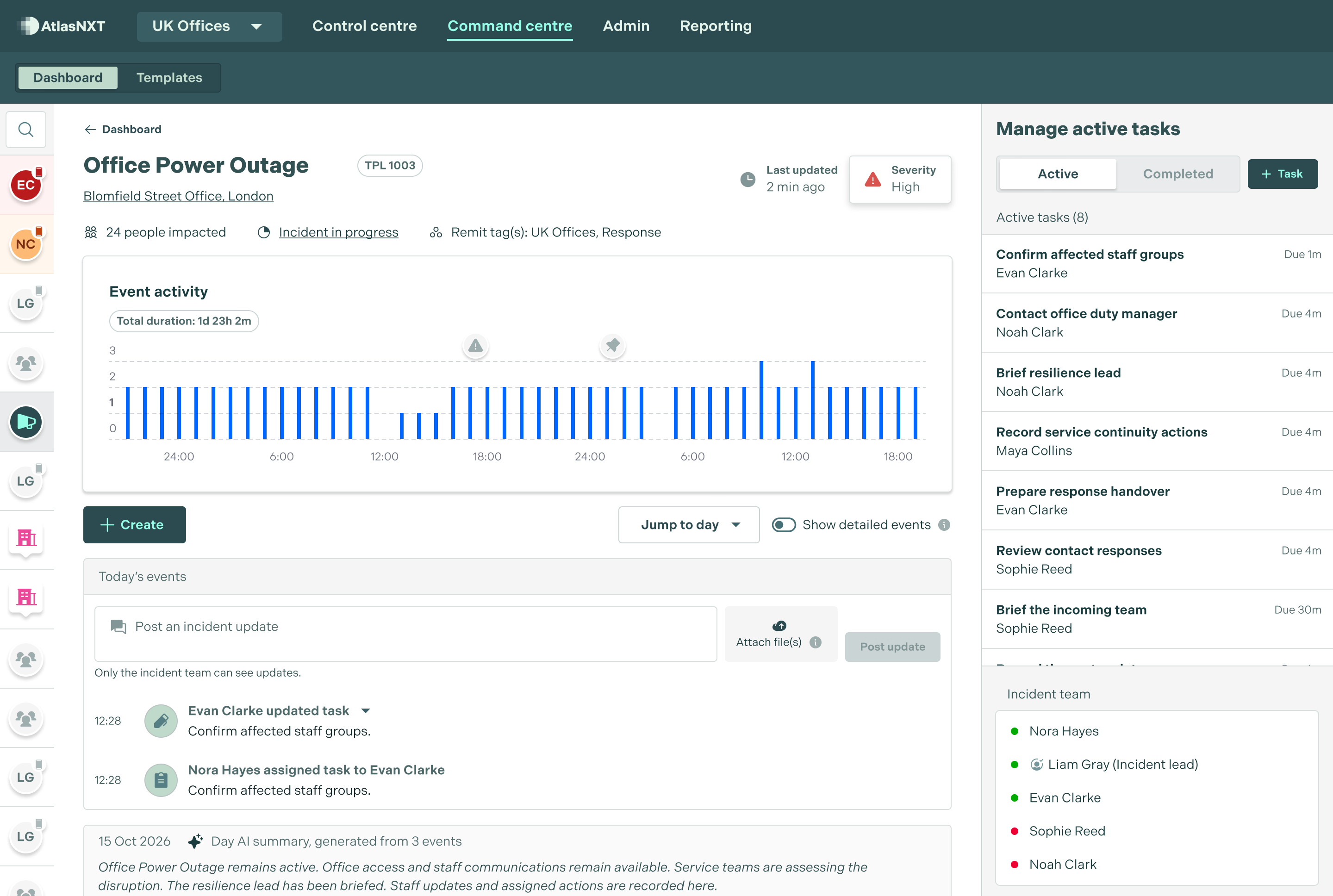
A service outage can quickly become a staffing, premises, and client-service problem. Capture the first report, bring the right people into the incident, and assign actions. Each team can see what has happened and what still needs attention.

Set geofences around offices, branches, and other key locations. Receive alerts when people enter or leave an area.

Contact affected teams by SMS, push notification, satellite message, voice call, or email. Check ReachScore™ to identify gaps in contact coverage.

Keep reports, decisions, communications, and assigned actions together from the first alert through to closure.

View weather, security, and travel disruption alongside offices and travelling employees to assess who may be affected.
During a disruption, the resilience lead needs an accurate update. Security needs to know who is affected. Operations needs to keep services running. When each team works from a separate inbox or spreadsheet, they can spend valuable time reconciling different accounts of the same event.
AtlasNXT gives these teams one incident workspace. Capture reports in a structured form, establish who is coordinating the response, and assign tasks to named people. Updates and communications stay with the incident, so the next shift can see the current position and outstanding actions.
Send targeted instructions to a branch, an office, or a group of travelling employees. Use check-ins to confirm welfare and identify people who need follow-up. Urgent alerts can override Do Not Disturb and silent settings on supported devices, helping critical messages get through.
For financial entities subject to DORA, timely communication and an accurate incident record form part of a wider resilience programme. AtlasNXT supports the coordination and evidence behind that work. Your teams remain responsible for classifying incidents, assessing reporting duties, and making the required submissions.


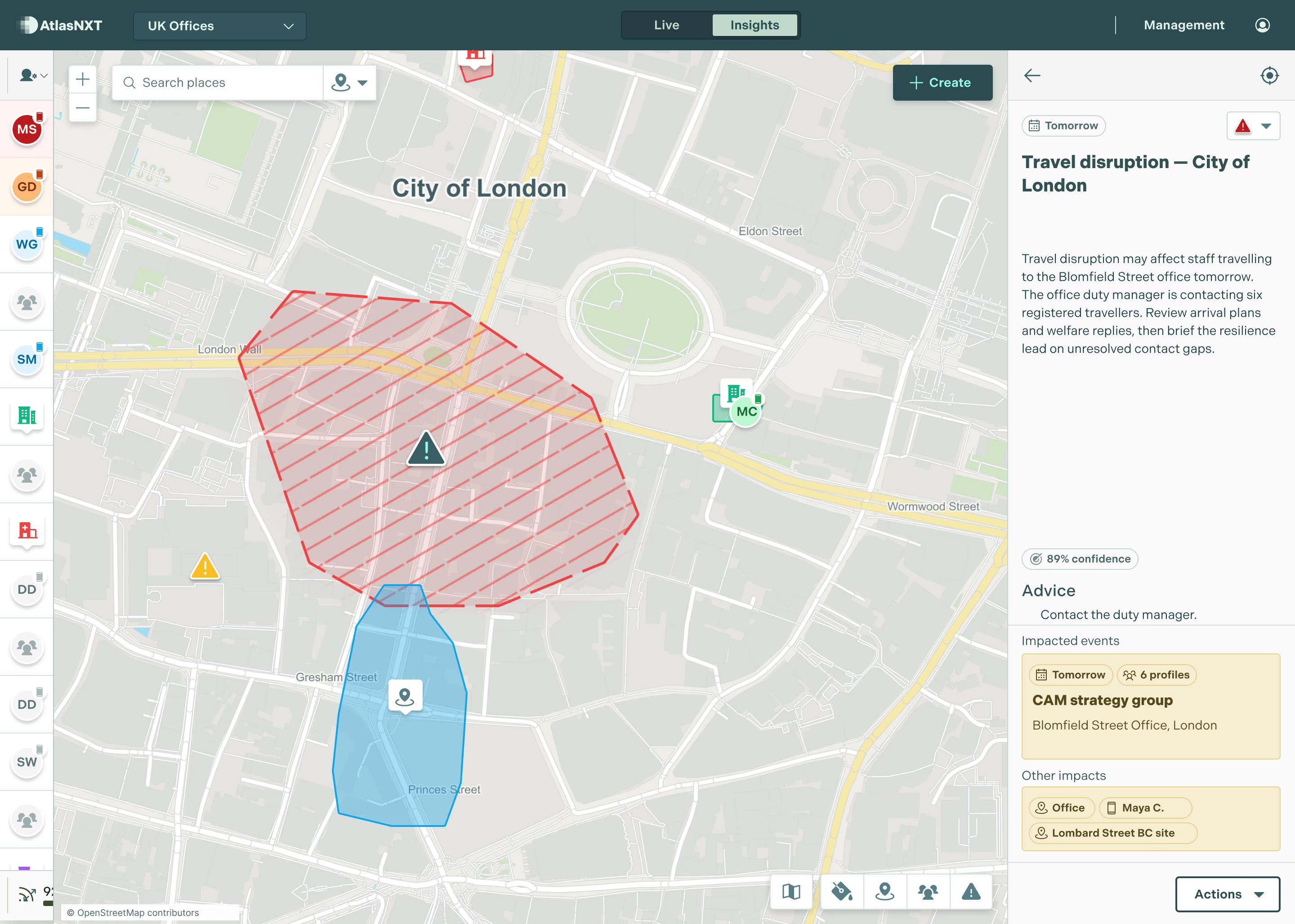
View live or last known staff locations alongside your offices and branches. Assess nearby risks, contact the affected teams, and use welfare responses to focus your next action.


Give local teams the view they need, and let those leading the response see the wider picture. Keep incoming operational alerts in the same incident workflow.