
Humanitarian response
Precision Communications Under Pressure in Gaza
How a major humanitarian agency maintained visibility of its missions, the ability to communicate with teams on the ground, and the confidence of its people in one of the most challenging operating environments imaginable.
Even when there was no GSM network and communications were down, sometimes for hours or days, we never lost the ability to communicate.
Organisation
A major humanitarian agency operating in Gaza
Sector
Humanitarian response
Environment
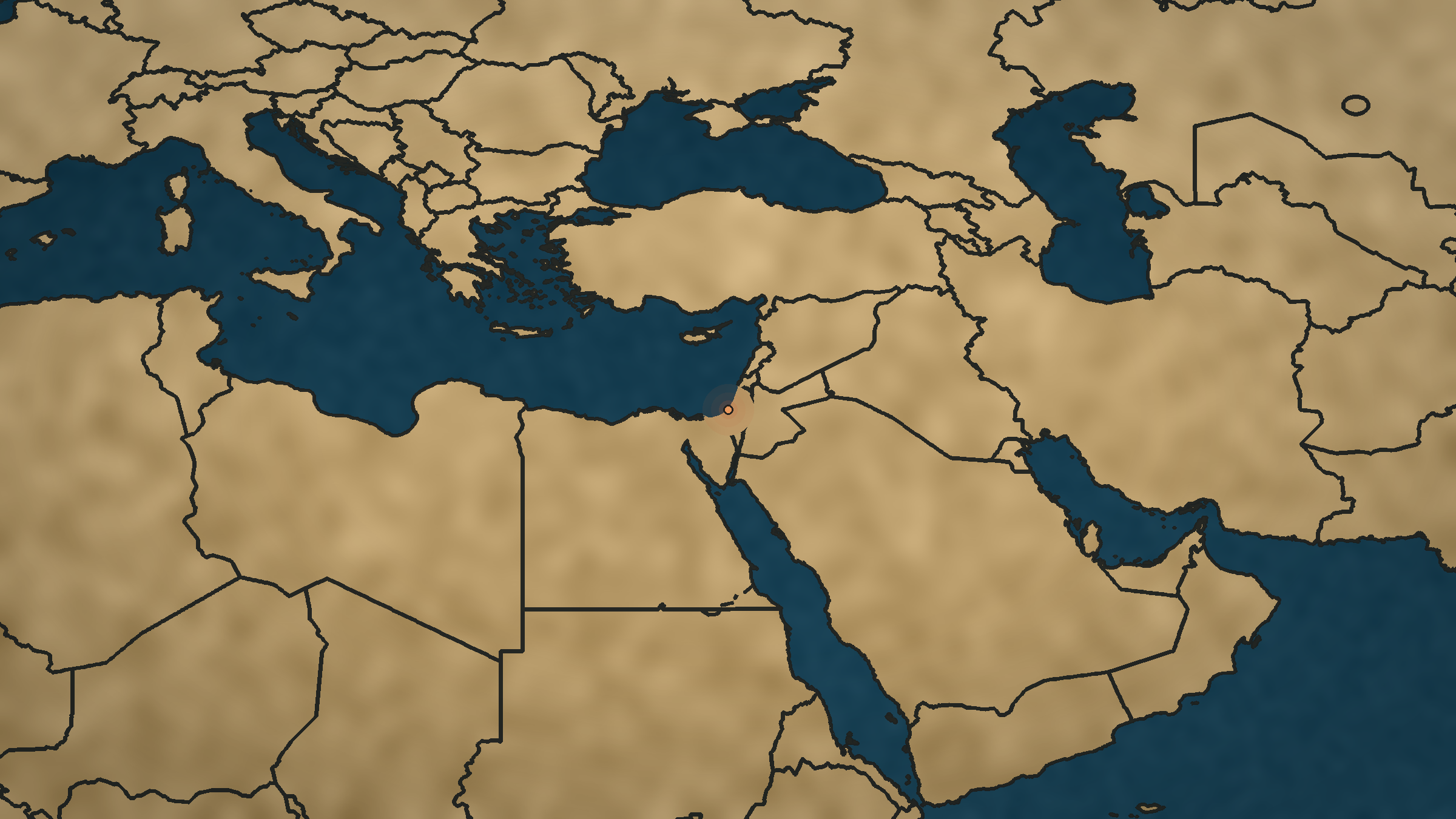
Gaza: insecurity, displacement, degraded infrastructure, intermittent communications
Products used
AtlasNXT real-time tracking · satellite-enabled messaging · geofencing · operational oversight
THE IMPACT
Visibility, Control, and Confidence
Overview
A large global agency operating in Gaza runs one of the most complex humanitarian responses in the world.
During this period, AtlasNXT provided a critical layer of precision communications, enabling the agency to maintain operational awareness, track mission movements, and communicate with personnel even when traditional systems were unavailable.
Following the events of 7 October, the agency was required to deliver critical aid across Gaza under conditions defined by insecurity, displacement, degraded infrastructure, and intermittent communications. Humanitarian missions continued at scale, moving food, fuel, and medical supplies, in an environment where visibility and coordination were increasingly difficult to maintain.
The Challenge: Operating Without Reliable Infrastructure
The agency's operational environment presented a unique combination of challenges.
Humanitarian missions were frequent, complex, and high-risk. Convoys carried essential supplies, food, fuel, and medical aid, alongside medical evacuation teams, often moving through areas where conditions could change rapidly.
At the same time, the underlying infrastructure required to coordinate those movements could not be relied upon.
Communications were inconsistent. There were periods where GSM networks were unavailable entirely, radio coverage was not always comprehensive, and Internet access was limited/ unreliable.
Operationally, the situation was equally demanding. Control rooms had to be relocated multiple times. Teams were working under sustained pressure. Many personnel were themselves displaced, operating in extremely challenging personal circumstances while continuing to support the humanitarian response.
In this environment, maintaining visibility of movements, and the ability to communicate with teams on the ground, was not just valuable. It was essential.
The Approach: A Practical Layer of Precision Communications
The agency deployed AtlasNXT as a focused operational capability to support mission movement and communication.
Rather than introducing complexity, the platform was used in a targeted way, centred on what mattered most in that environment: knowing where people were, and being able to communicate with them.
AtlasNXT enabled the agency to track mission movements in real time, providing operations teams with a continuous view of activity on the ground. This visibility was maintained through operations rooms within Gaza, and supported by additional oversight outside the immediate operational area.
Crucially, AtlasNXT extended beyond visibility. It enabled communication in conditions where other systems failed.
Satellite-enabled capability ensured that even when GSM networks were unavailable, teams retained the ability to send and receive messages. This proved particularly important during communications blackouts, where alternative channels were either unavailable or unreliable.
This combination of tracking and communication formed the foundation of what AtlasNXT delivered in practice: precision communications under pressure.
Embedding Into Operations
As operations continued, AtlasNXT became embedded in the agency's day-to-day approach to managing mission movement.
It was used to monitor humanitarian missions as they progressed, allowing operations teams to maintain awareness of where assets and personnel were at any given time. This visibility supported coordination, reporting, and decision-making in a highly dynamic environment.
Geofencing was also implemented to strengthen operational control. By defining expected movement areas, the agency could receive alerts when movements deviated, enabling immediate follow-up.
This capability added an additional layer of control in an environment where predictability was limited.
We set up geofencing so that if movement went outside the area, there was an immediate alert, and we could act straight away.
The Impact: Visibility, Control, and Confidence
The value of AtlasNXT was not theoretical. It was felt directly in operations.
Maintaining visibility in a disconnected environment
Even when communications infrastructure failed, the agency retained visibility of movements. This ensured that operations teams could maintain awareness, even in degraded conditions.
Strengthening security risk management
AtlasNXT became an important component of the agency's approach to managing operational risk. By combining tracking and communication, the platform enabled a more structured and controlled approach to mission oversight.
Providing confidence to teams on the ground
One of the most consistent themes in feedback was the reassurance provided to personnel. In an environment where uncertainty was high, this confidence was significant.
Ensuring continuity during communications blackouts
Communications outages were a recurring reality. Despite this, AtlasNXT ensured that communication was never fully lost. This continuity enabled operations to proceed with greater confidence, even when infrastructure could not be relied upon.
Improving control of mission movement
Geofencing and real-time visibility combined to provide greater control over mission execution. Operations teams could identify deviations quickly and respond immediately, helping maintain structure in a fluid environment.
I felt very comfortable knowing that people could see where I was, and that if something happened, they would know how to get to me.
Support That Matched the Environment
Alongside the technology, the agency highlighted the importance of responsive, reliable support. In a fast-moving and unpredictable operational context, access to support was critical, not just for resolving issues, but for maintaining continuity.
The support was top class throughout, always responsive, always available when we needed it.
This partnership approach ensured that the platform could continue to deliver value under pressure.
Summary: Precision Communications When It Matters Most
In one of the most challenging operating environments imaginable, the agency used AtlasNXT to deliver:
- real-time visibility of mission movements
- resilient communication in low-connectivity environments
- centralised operational oversight
- enhanced safety and coordination
The value was in functionality, reliability and simplicity.
In environments where infrastructure is degraded and conditions are unpredictable, precision communications becomes the difference between operating with uncertainty and operating with control.
Book demo