Inspections & Assessments

Construction plant room safety use case

Every finding followed through. Every handover better informed.

Keep electrical plant room checks, evidence, and follow-up together. Give site managers a clearer view of what needs attention and help the next trade start with the right information.

Example construction operation with modelled ROI.

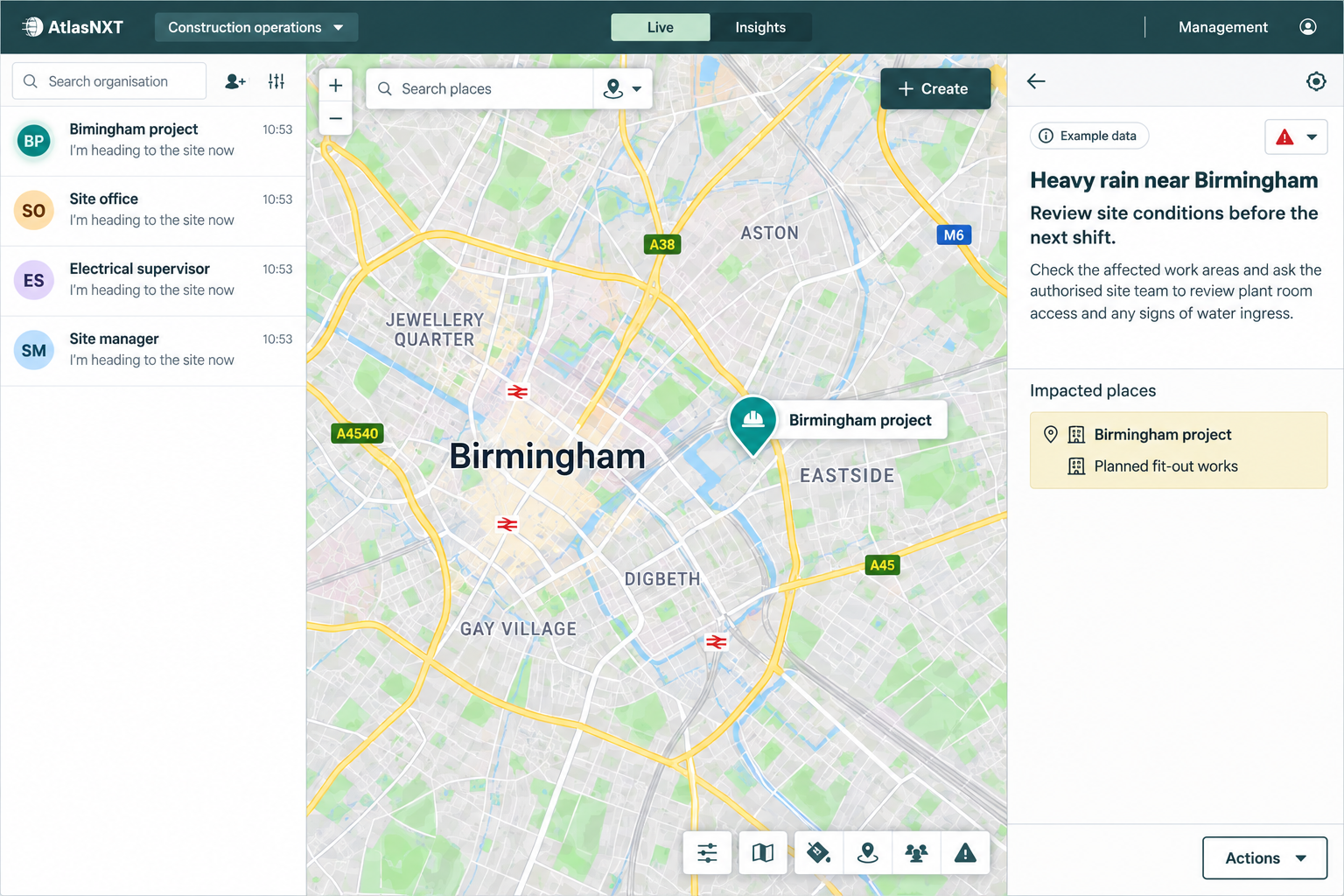
Birmingham construction project shown alongside a heavy-rain alert and site team contacts
One Birmingham project, with changing conditions and the site team in view. Adapted product view with example data.

Operation

Commercial construction, fit-out, and commissioning

Footprint

Six blocks on one Birmingham project

Scope

36 electrical plant rooms

Focus

Access, visible condition, evidence, and trade handovers

The modelled opportunity

£54,120

annual value of staff capacity released

126%

modelled first-year return, rounded

106

hours released from administration each month

Annualised at full adoption. The assumptions, labour rates, and programme budget are set out below.

The room changes. The record needs to keep up.

Consider a principal contractor coordinating fit-out and commissioning across six commercial blocks on a large Birmingham project. Electrical specialists, mechanical contractors, and other trades work to a changing programme around 36 plant rooms, with six rooms in each block.

A clear access route at the start of a shift can become a storage area by the afternoon. A photo in a message thread may show a concern without saying which room it belongs to, who reviewed it, or whether anyone checked the condition afterwards.

AtlasNXT brings that sequence together: a room reference, a completed check, the evidence, and a follow-up record. Site managers spend less time chasing updates, and incoming teams have a clearer starting point for the next handover.

Make the routine checks consistent

The contractor configures a reusable assessment around its site rules and authorised inspection routes. The same structure helps reviewers compare findings across rooms and shifts:

  1. Access and housekeeping. Record obstructions, stored materials, and the condition of marked access routes and working space.
  2. Visible condition. Capture visible enclosure or door damage and signs of water ingress from an approved safe inspection position.
  3. Access controls and handover. Record concerns with posted warnings or access arrangements, attach evidence, and identify the room and responsible reviewer.

Scheduled and recurring requests keep the agreed rounds organised. Selected managers receive a notification when a check is submitted, with the responses, notes, and attachments ready to review.

Competent, authorised electrical specialists control electrical testing, isolation, energisation, and decisions about safe access. These visual records support the site's work-control process; they are not electrical certification.

From changing conditions to a recorded response

A useful check connects what is happening around the site with the evidence from the room and the people who can act on it.

01 / Changing conditions

Focus attention where it is needed

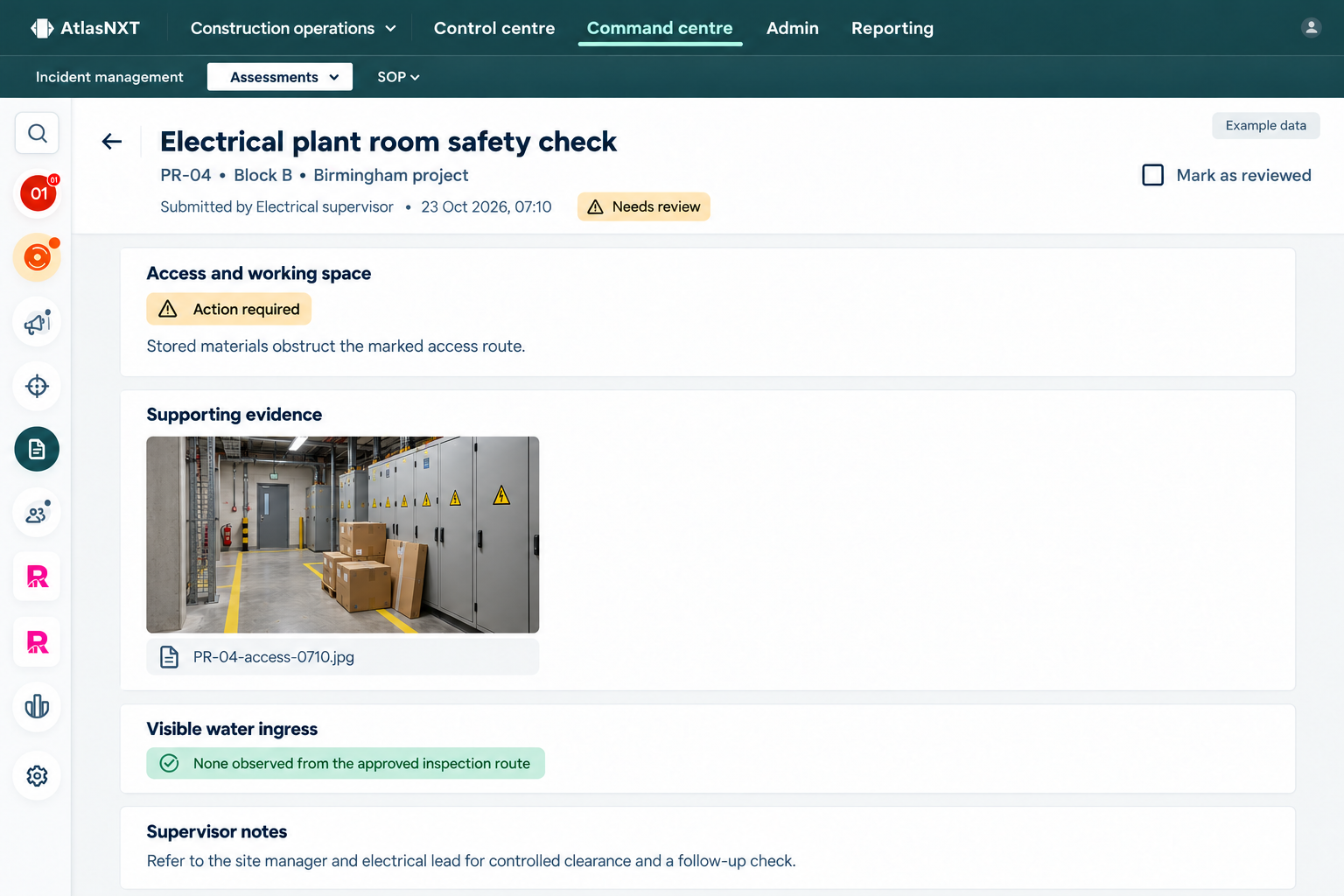
A relevant heavy-rain alert near Birmingham prompts the site team to review planned work and request a focused assessment of access and any visible water ingress. An operator sends the check to authorised staff through AtlasNXT.

See Global Alerts

02 / Site and room context

Know exactly which finding is being discussed

The assessment identifies the Birmingham project, Block B, and plant room PR-04. Live location updates from connected people or assets, where available, support the wider site picture. The room reference keeps the evidence specific.

See Real-Time Tracking
Electrical plant room PR-04 assessment submitted at 07:10, showing stored materials obstructing a marked access route, an attached photo, and supervisor notes
07:10: the electrical supervisor records an obstructed access route in PR-04 and attaches evidence from the approved inspection position. Adapted assessment view with example data.

03 / Manager review

Put the finding in front of the right people

The selected manager receives the submission alert. The site manager and electrical lead review the evidence and arrange controlled clearance through the site's procedures. Where broader coordination is needed, an operator can open an incident, assign tasks, and record decisions on its timeline.

See Incident Management

04 / Follow-up and handover

Record what changed before the next trade arrives

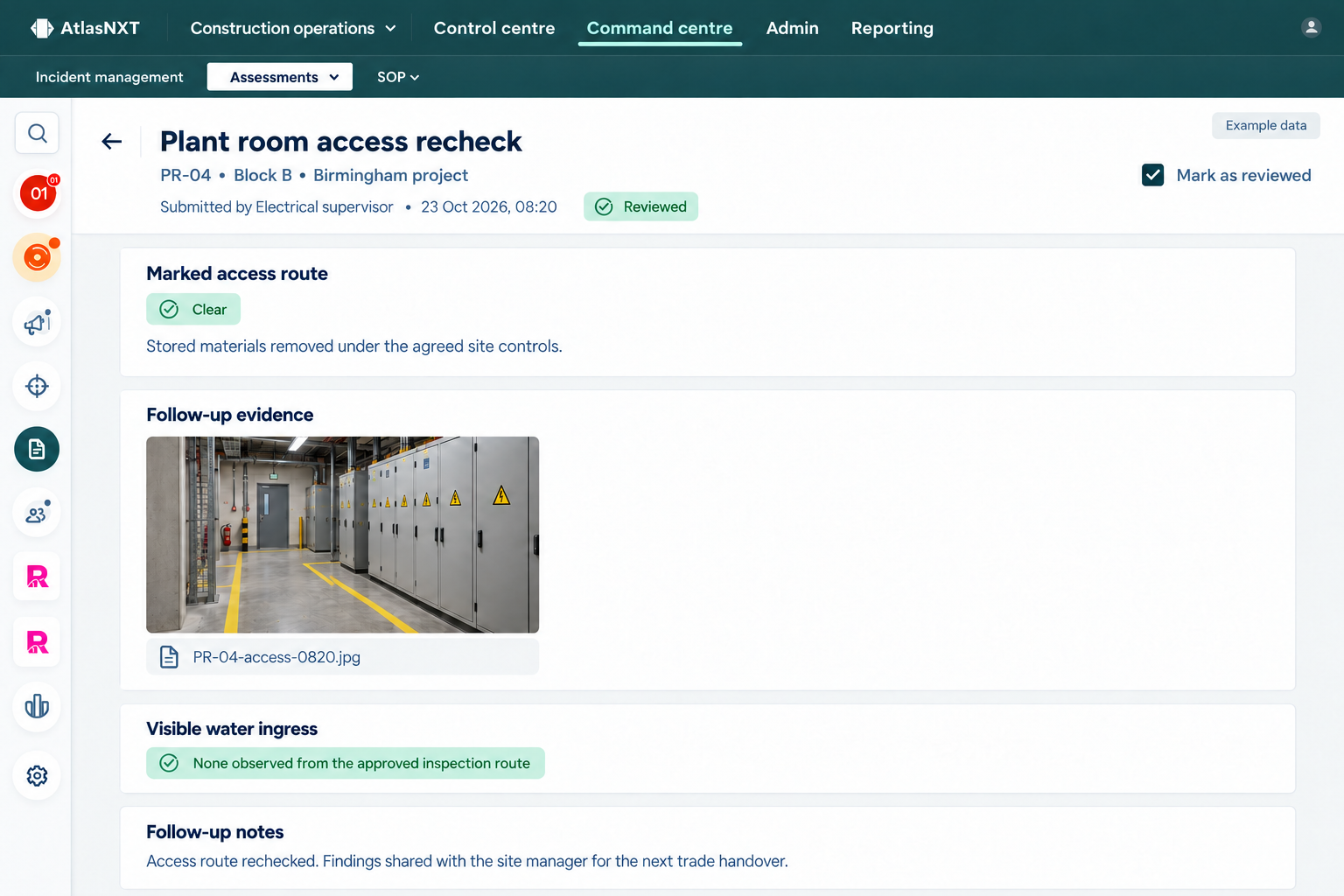
At 08:20, the authorised supervisor submits a follow-up check showing the access route clear. The new photo and notes give the manager a record to review and share at handover. The initial finding and recheck tell a more useful story than a verbal assurance alone.

See Inspections & Assessments
Reviewed follow-up assessment for the same Birmingham plant room PR-04 at 08:20, with a clear access route, matching photo, and handover notes
08:20: a follow-up record shows the same access route after controlled clearance, with the finding shared for the next trade handover. Adapted assessment view with example data.

The operational value: a relevant alert focuses the check, a room reference gives context, the assessment brings back evidence, and the responsible team directs the response. A recorded follow-up helps the next shift understand what changed.

Give the project team evidence it can use

The site manager can review submissions, findings, and review status without asking several people to reconstruct the same event. The electrical lead can see the recorded concern and follow-up. The project team has source material for handover and assurance discussions.

Time-stamped responses, the person who completed the check, room references, and attached evidence support a clearer audit trail. Consistent records make recurring access or housekeeping concerns easier to identify and discuss with the relevant contractor.

For project leadership, the practical benefit is less administration around routine checks and a stronger basis for asking whether findings are being reviewed and followed through.

A return built on less chasing and better records

The example site plan covers 36 plant rooms across six blocks, with two authorised visual rounds per room on 22 operating days a month: 1,584 checks. The model retains the £24,000 first-year programme budget, the same time saving per check, and the same labour rates. Supervisor coordination and assurance preparation savings remain at 24 and 16 hours a month. Inspection frequency is set through the site's own risk assessment and work arrangements.

Annual assumptions at full adoption, in GBP
Work made easierAssumptionHours releasedAnnual value
Recording and routing checks1,584 checks a month × 2.5 minutes saved × 12 months, at £35/hour792£27,720
Supervisor coordination24 hours a month spent chasing updates and preparing handovers across six blocks × 12 months, at £55/hour288£15,840
Preparing assurance evidence16 hours a month locating and consolidating source records × 12 months, at £55/hour192£10,560
Total modelled benefitValue of staff capacity available for other work1,272£54,120

First-year return

With a £24,000 first-year programme budget for software, setup, and training:

(£54,120 − £24,000) ÷ £24,000 × 100 = 125.5%, rounded to 126%

£30,120 of net modelled value. The £24,000 budget is a planning assumption to test in a trial, not an AtlasNXT quotation.

Keep the safety check thorough

The time savings come from recording, coordination, and evidence preparation. Physical inspection time is unchanged.

These are separate administrative activities in the model. The value depends on using the released staff capacity for other productive work.

The model assumes 12 active months at full adoption and illustrative loaded labour rates. It values staff capacity, not guaranteed payroll savings, and assigns no financial value to avoided injury, fire, shutdown, or fines. Replace the assumptions with measured results and a confirmed programme budget.

Start with one block and prove the improvement

Trial the process in selected plant rooms for four weeks. Agree the questions, authorised roles, evidence, review responsibilities, and follow-up process with the site manager and electrical lead.

Compare recording time, coordination effort, and assurance preparation with a comparable baseline. Track submission completeness, time to manager review, and whether follow-up records are available at handover.

Account for changes in trade activity and the number of checks. Build the rollout case around more complete records and less administration, while preserving the time and care each safety check requires.

Bring your plant room inspection process.

Show us one check, one handover challenge, and the evidence your project team needs. Explore a focused Inspections & Assessments trial for your construction site.

Request a construction inspection trial