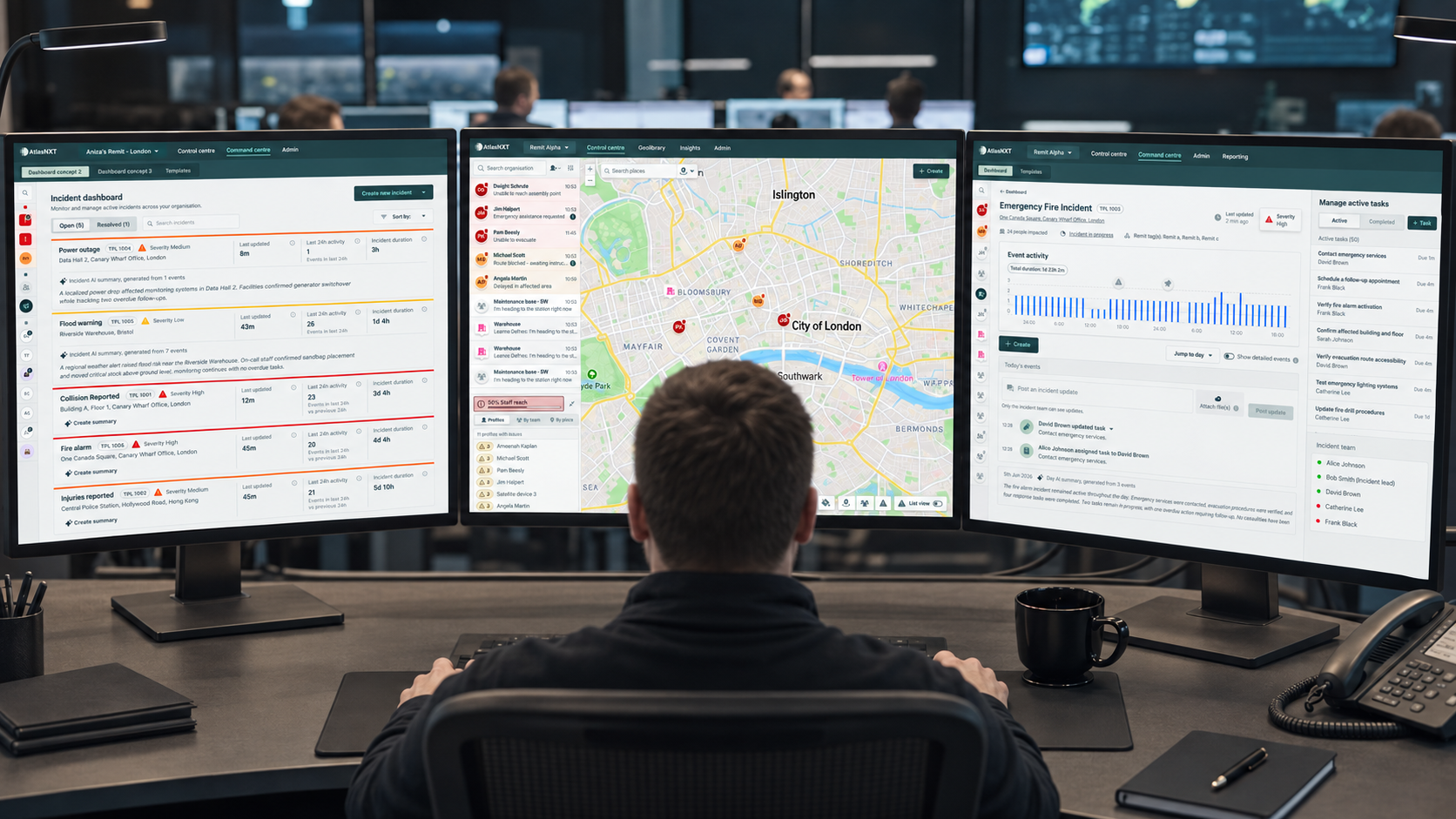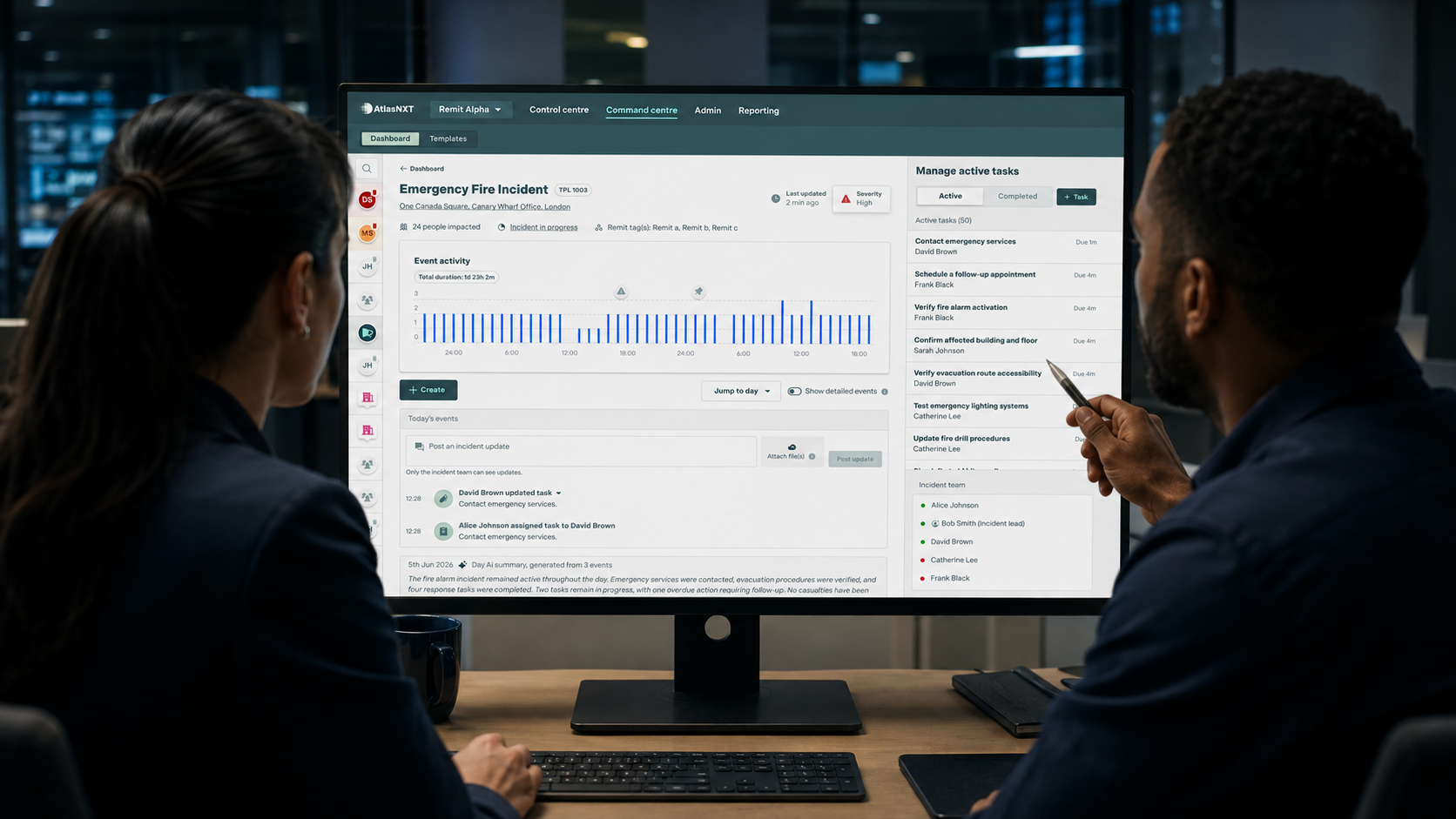

Security operations turns information about threats and disruption into coordinated action. For a critical event management team, the central questions are who may be affected, what they need to do, and who is responsible for helping them.
A platform can bring information and workflows together, but the operating model determines how the team uses them. A stream of alerts has limited value if nobody owns the decisions and follow-up that result.
Start with relevance
An event becomes operationally relevant when it may affect the organisation's people, sites, journeys, or activities. The team needs enough context to assess that connection without treating every report as an incident.
For example, a transport disruption may matter because a field team has a journey planned through the affected area. Check the event's source and time, then confirm whether the plan is current. Preserve uncertainty where information cannot yet be verified.
Security intelligence can support this assessment, but it should inform judgement rather than silently determine every response.3
Establish the affected population
Build the audience from appropriate operational information, such as site assignments, travel plans, and relevant location information. Check how current each source is. Avoid treating an old location as a confirmed present position.
Define who is included and who may be missing: contractors, visitors, and colleagues using different systems can otherwise fall between datasets. Keep the information shared with responders proportionate to their role.
Choose an action people can follow
An incident message should explain the relevant situation, the required action, and how to request help or provide an update. Include the time of the information and the next update where useful.
For example, a disruption message may ask recipients to confirm whether they are affected and pause a planned journey pending local advice. The response team then needs a workflow for people who request assistance or do not reply.
AtlasNXT's GSOC material describes how workforce messaging connects with security operations.2 The practical objective is an owned response, not a high message count.
Maintain ownership through the response
Give each unresolved case an owner and a next-action time. When another team takes over, confirm that it has accepted responsibility and has the information needed to proceed.
- Record confirmed facts separately from assumptions.
- Identify decisions that exceed the current responder's authority.
- Keep communication attempts and replies attached to the case.
- Review outstanding actions at each handover.
- Close the case with a reason and any follow-up work.
JESIP's decision model is a useful reference for organising assessment, options, action, and review.1 Adapt it to the organisation's own responsibilities and escalation rules.
Review outcomes, not only activity
After the event, examine whether the right people were identified, whether instructions were understood, and whether assistance reached the cases that needed it. Review the consequences of missing or outdated information.
Separate an operator's performance from weaknesses in staffing, procedures, or data. A review is more useful when it produces a specific change that can be tested than when it ends with a general instruction to communicate better.
Frequently asked questions
Is security operations the same as a cyber SOC?
Not always. This article concerns physical and workforce critical events. Cyber operations has a different technical remit, although the teams may need to coordinate.
Does every alert need an incident record?
Use a documented triage process. Record significant decisions at a level appropriate to the event and the organisation's requirements.
What is the most important handover detail?
The incoming team must know what remains unresolved, who owns it, and what action or decision is due next.
Explore the workflow with AtlasNXT
Bring a workforce scenario to an AtlasNXT demonstration and explore how communications, incident coordination, and follow-up would fit your team. Book a demo.
References
1. JESIP: Joint Decision Model.
2. AtlasNXT: GSOC mass notification and security operations.