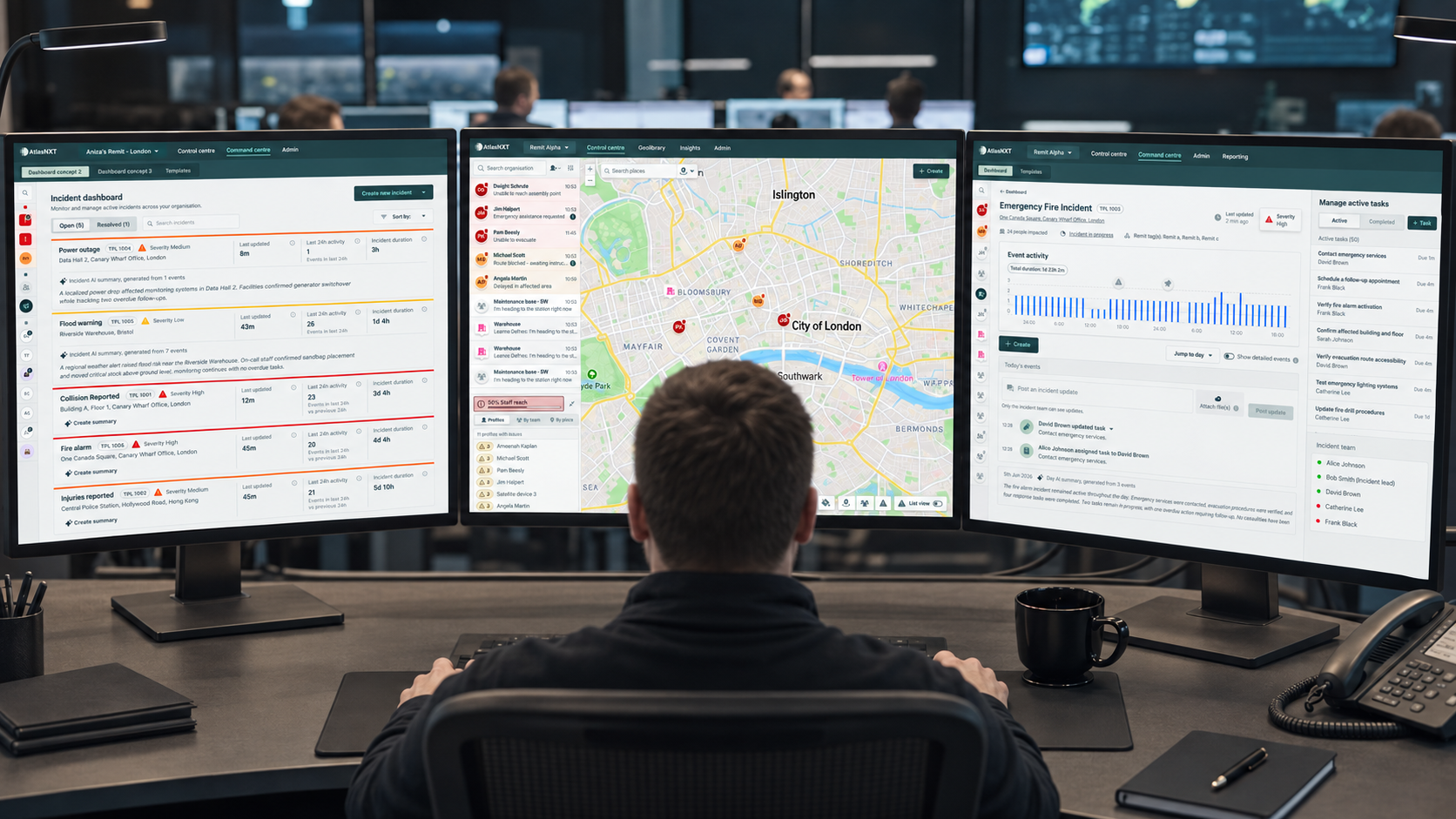

A security operations center analyst helps protect people, sites and travel by assessing incoming reports and coordinating a response. The work can include checking site alarms, monitoring disruption, contacting affected staff and keeping an accurate record as an incident develops.
The responsibilities vary with the organisation. An analyst supporting remote workers may spend more time on welfare checks and journey disruption, while a site-based team may focus on access control, CCTV and local response.
Build a clear picture of the incident
A site alarm, weather warning or travel advisory is a starting point. Check where the event is happening, which people or facilities could be affected, and whether the information is current. Bring together reports from staff, monitoring systems and local contacts before deciding what needs attention.
Keep confirmed facts separate from assumptions. Record what has been checked, what is still unknown and who is responsible for the next action.
Triage means deciding what needs attention
Start by identifying what is known, the source, the timestamp, and the potential impact. Gather enough context to decide whether the signal needs action, further investigation, or closure under the agreed procedure.
For example, check whether a reported disruption overlaps with a site or planned journey and whether affected staff have been contacted. Record why you escalated or closed the report so the next analyst can follow the decision.
Escalate with a clear decision request
A useful escalation contains the event, affected people or assets, current uncertainty, actions already taken, and the decision needed. Follow the organisation's severity and authority rules. If the normal contact is unavailable, use the documented backup route.
Avoid treating escalation as proof that responsibility has transferred. Confirm acceptance, and keep ownership clear until it does. The next analyst should be able to identify who is acting and when the next update is due.
Communicate and hand over accurately
HSE's shift-handover guidance highlights preparation, information exchange, and cross-checking by incoming staff.1 These principles are useful when designing an operations handover, although the exact format should match the work.
Include open incidents, outstanding decisions, agreed deadlines, and anything that changes how the next shift should respond. Separate confirmed information from assumptions. If a person has not replied, record “no reply received” rather than “safe” or “in danger”.
Build evidence of relevant skills
- Write a concise incident summary using fictional or properly anonymised information.
- Explain how you checked the source and assessed uncertainty.
- Show the point at which you would escalate and why.
- Demonstrate the tools relevant to the particular discipline.
- Review what could improve after the incident or exercise.
For physical operations, practise workforce communication and case follow-up. AtlasNXT's GSOC workflow material illustrates the connection between mass notification and operational response.2
Frequently asked questions
Does every analyst work nights?
No. Coverage models vary. Ask about the actual rota, on-call duties, handover time, and staffing before accepting a role.
Is a certificate always required?
Requirements depend on the employer and discipline. Match preparation to the job description and demonstrate practical judgement alongside any qualification.
Is sending an alert the end of the task?
No. Where the workflow requires a reply or assistance, the team must track and resolve those follow-up actions.
Explore the workflow with AtlasNXT
Bring a workforce scenario to an AtlasNXT demonstration and explore how communications, incident coordination, and follow-up would fit your team. Book a demo.
References
2. AtlasNXT: GSOC mass notification and security operations.