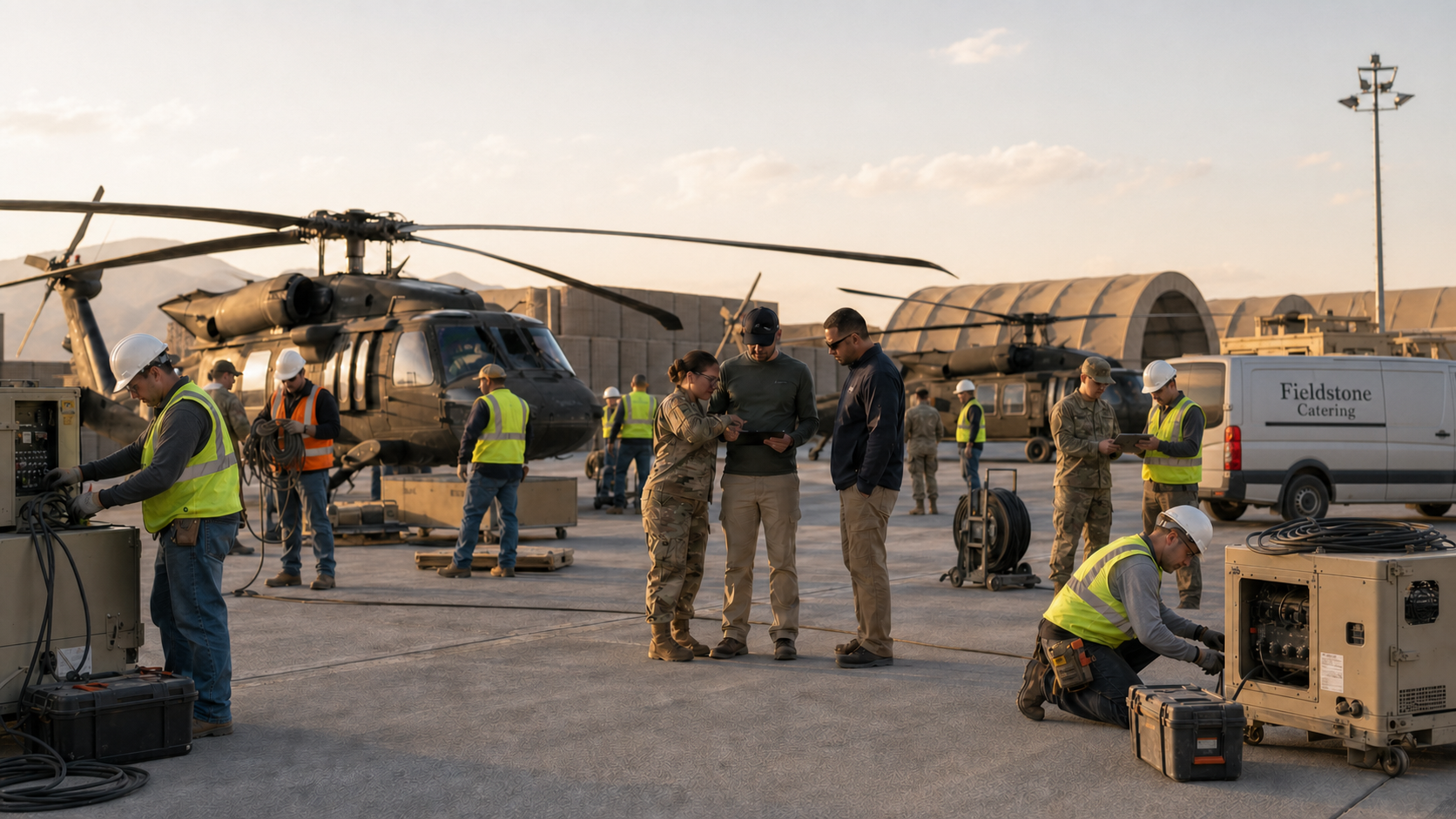


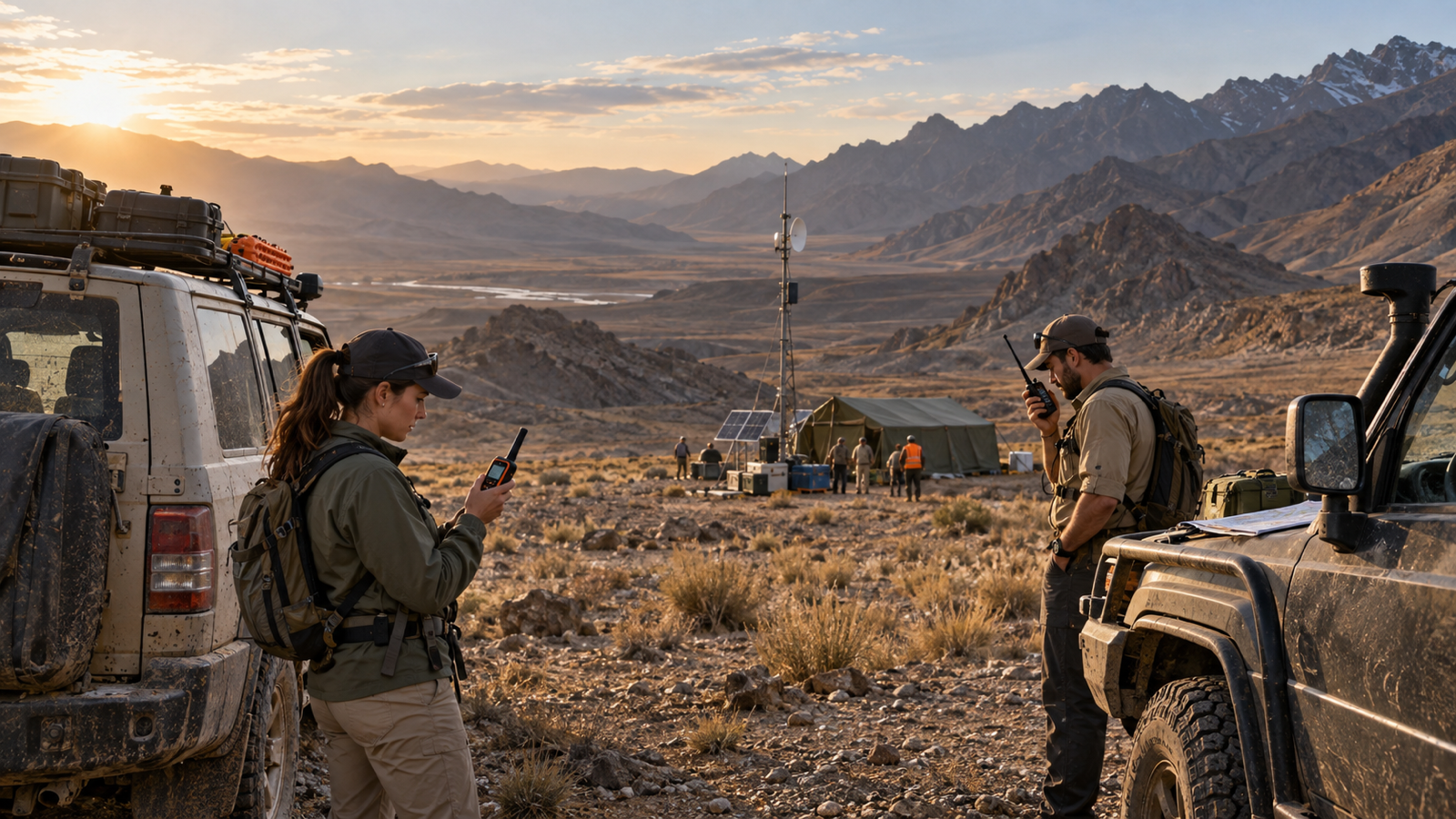

For teams working across remote locations, unstable environments, or wide areas of responsibility, losing connectivity is not a rare technical exception. It is a foreseeable operating condition. A journey may begin with dependable mobile data, pass through intermittent coverage, and end where there is no terrestrial signal at all. An incident can also overload or damage infrastructure that worked perfectly well the day before.2, 3
The scale of mobile coverage can create false reassurance. GSMA reported that about 300 million people still lived beyond mobile broadband coverage in 2024, while UK resilience guidance notes that rural coverage can be patchy or absent and that public networks can become congested during major incidents.1, 2 Those figures describe different contexts, but they point to the same operational truth. A coverage map is useful planning information. It is not proof that a particular person, on a particular route, with a particular device, will be reachable at the moment help is needed.
The practical response is to design a model that remains intelligible when contact becomes intermittent. That means deciding which people need which channels, what a missed communication means, who owns the follow-up, and how different devices feed one operational picture.
What changes when loss of signal is treated as normal?
Plans become more honest. Instead of describing a single preferred channel and assuming it will be available, the organisation defines how communication should work across connected, degraded, and disconnected conditions.
This is broader than buying a second device. ETSI’s guidance on emergency communications treats resilience and preparedness as concerns spanning different types of network, services, operational arrangements, and recovery from multiple failures.3 UK Cabinet Office guidance makes a similar point in plainer terms. Technical tools, communication processes, and organisational arrangements should not be considered separately.2
That distinction matters. A satellite device stored in a vehicle does not create resilience if nobody knows when to turn it on, who monitors it, what message format to use, or what action follows a missed check-in. Two mobile network subscriptions do not solve the problem if both rely on the same damaged power supply or if responders have not tested the devices. A well-written escalation chart is equally limited if the person responsible for receiving the alert cannot see which channel last worked.
Treating no signal as a design condition shifts the planning question from, “Do we have coverage?” to, “How will this operation behave as coverage changes?”
What actually fails when communications fail?
“No signal” is only one failure mode. A device may show service while the network is congested. Data may be available while voice calls struggle, or the reverse. A handset may be discharged, damaged, switched off, left behind, or configured incorrectly. A message may leave the sender but reach the recipient too late to influence a decision. Contact details may be out of date. A duty officer may receive an alert without knowing who is expected to act.2, 4
Public mobile networks have finite capacity and can be overwhelmed by abnormal demand, according to Cabinet Office resilience guidance.2 The US Cybersecurity and Infrastructure Security Agency’s PACE guidance also starts from the premise that environmental conditions can affect infrastructure, equipment, and users, and that primary capabilities may be disrupted or degraded.4
These are not equivalent states, so they should not be displayed or managed as if they were. “Message sent” is different from “message delivered”. “Delivered” is different from “acknowledged”. “No response” is different from “person in distress”. A last known location is not a current location. If a system compresses those distinctions into a reassuring green icon, it can make the operational picture less accurate rather than more accurate.
Resilient communications therefore depend on explicit status. Operators need to understand what has been confirmed, what remains unconfirmed, how old the information is, and what the agreed operating procedure requires next.
How should an organisation define reachability?
Reachability should be defined as an operational state, not as possession of a phone or satellite device. For each relevant person, vehicle, or field team, the organisation should know the expected communication method, the most recent confirmed contact, the alternative available channel, the next expected contact point, and who is responsible for acting if that contact does not occur.
The definition should also reflect the assignment. A staff member at a well-connected office does not need the same communications provision as a driver crossing a remote area, a specialist visiting a temporary site, or a team moving through a location affected by a sudden disruption. Provision can be based on exposure and task, rather than applied indiscriminately to everyone.
AtlasNXT Check-Ins can show who has responded and who has not. The absence of a response is deliberately not treated as proof of danger. It is information for an operator, who follows the agreed standard operating procedure and considers the person’s task, route, last contact, available channels, and local conditions.
ReachScore™ supports the same discipline at a wider level. It is designed to expose gaps in communication readiness, not to guarantee that every message will arrive. That is a more useful promise because it encourages managers to address the gap before an incident instead of discovering it during one.
How can a PACE plan become part of daily operations?
Primary, Alternate, Contingency, and Emergency planning, usually shortened to PACE, provides a useful structure for communications resilience. CISA describes it as a way to establish predictable, redundant options when primary communications are degraded or unavailable.4
The value is not the acronym. It is the requirement to define triggers. If the primary channel is unavailable for ten minutes, does the user move to an alternate network, send a low-bandwidth message, use a radio, activate a satellite device, return to a known contact point, or wait until the next scheduled check-in? Who decides that the operation has moved from an alternate method to a contingency method? How does the control function recognise that transition?
A useful PACE model is role-specific and route-specific. For a routine journey through populated areas, the AtlasNXT app on a smartphone may be the normal channel. For a journey that leaves terrestrial coverage, a compatible satellite device may be assigned to the traveller or vehicle, subject to suitable hardware, airtime, configuration, and training. A fixed field location may use a separate local system and scheduled reporting rhythm. The arrangement depends on risk, the communications environment, and the assignment.
Crucially, this should not be described as automatic cellular-to-satellite failover unless a particular, tested technical configuration genuinely provides it. In many operations, changing channel involves a person, a procedure, or a separate device. The operating model should make that transition visible rather than hide it behind an assumption.
Where should satellite communications fit?
Satellite communications are best understood as a complementary channel. Cabinet Office guidance identifies them as one way to improve resilience through diversification, while GSMA’s work on non-terrestrial networks describes satellite capability as a complement to terrestrial mobile infrastructure, particularly for remote and underserved areas.2, 5
Complementary does not mean universal. Satellite services vary by device, constellation, coverage, subscription, message type, local rules, and physical conditions.5 A deployment plan must consider power, charging, carriage, access to the sky, user competence, airtime, maintenance, and the team responsible for monitoring incoming information. The device also has to be with the right person when it is needed.
This argues for selective provision based on operational need. A small number of people moving beyond cellular coverage may require compatible satellite devices, while the larger workforce uses smartphones where mobile data is available. AtlasNXT can present suitable authorised information from compatible devices where permissions, format, security, and an approved integration or import are in place. The organisation still chooses the hardware, airtime, configuration, and procedures appropriate to the assignment.
The strongest design is often deliberately mixed. It accepts that different people may use different bearers while requiring the resulting information to be interpreted consistently.
How much information must get through?
During degraded communications, the objective is not to reproduce every feature available on a fast connection. It is to preserve the minimum information needed for safe, proportionate action.
That minimum will vary, but the core questions are stable. Who or what is the update about? When was the information created and received? Where does it relate to? What status has actually been confirmed? What action is requested? Who owns that action? When is the next update expected?
This approach prevents a common design error: allowing a large volume of low-value data to obscure a small amount of operationally decisive information. A short, structured update with an explicit time and status may be more useful than a long message whose origin and urgency are unclear. It also allows teams to design procedures that remain workable on constrained channels.
AtlasNXT’s Incident Room can keep significant updates, tasks, communications, decisions, and status changes with the relevant event. It does not make poor information reliable. It gives operators a place to preserve context, distinguish what is known from what is pending, and coordinate the work that follows.
How can location support safety without becoming surveillance?
Location can help an organisation understand exposure, direct support, and interpret a missed contact. It is also personal data, and indiscriminate collection can damage trust and create risk.
The OECD privacy guidelines emphasise collection limitation, data quality, purpose specification, use limitation, security safeguards, openness, and accountability.6 The ICRC’s data protection handbook applies comparable disciplines to the demanding conditions of humanitarian operations and the use of new technologies.7
The practical implication is that a safety case should not become an excuse to collect every possible location point. The organisation should define why location is needed, when it is active, who can see it, how long it is retained, and what alternatives exist where appropriate. The design may use live location for a defined high-risk movement, event-led sharing for a particular task, or a consent-based arrangement where consent is genuinely suitable. The correct lawful basis and safeguards depend on the jurisdiction and relationship, so technology cannot decide them on the organisation’s behalf.
AtlasNXT Remits can define geographic areas of responsibility and authorised operator views. That helps align access with operational responsibility, but governance still matters. Permissions, retention, device policy, staff communication, and review should be settled before location data is used at scale.
What should be visible before an incident occurs?
A resilience dashboard should expose uncertainty, not merely display assets. Managers should be able to see which assignments rely only on terrestrial coverage, which selected users have an appropriate alternative, which devices or contact details have not been tested recently, where check-in arrangements are missing, and who owns each unresolved gap.
This is where readiness differs from tracking. The purpose is not to watch movement for its own sake. It is to know whether the communications arrangement matches the work. A person may be stationary and well prepared, or moving and poorly prepared. A device icon cannot answer that question without the surrounding assignment, procedure, and status.
Suitable authorised data can be brought into AtlasNXT where permissions, format, security, and an approved integration or import allow it. The useful outcome is a clearer operational picture, not the claim that every system can or should be connected.
How should the plan be tested?
Testing should reproduce failure, not demonstrate the happy path. CISA’s PACE guidance says that training and exercises are necessary to make fallback arrangements usable.4 UK crisis communications guidance likewise stresses tested plans, alternative contact details, clear roles, and exercises that reveal weaknesses before a live event.8
A realistic exercise should remove the primary channel, delay a message, make a contact unavailable, change shift, and introduce conflicting information. It should test what the user does, what the operator sees, and whether the next person can understand the record.
The review should focus on behaviour as well as technology. Did the user know which device to use? Did the operator interpret non-response correctly? Were timestamps and locations clear? Was responsibility transferred? Did the team return to the primary channel in a controlled way? Did the exercise reveal people or routes with no credible fallback?
Those findings should change the plan, device allocation, training, or reporting rhythm. An exercise that produces no operational adjustment may have demonstrated familiarity, but it has not necessarily improved resilience.
What does a resilient communications model look like?
It does not promise uninterrupted visibility. It makes loss of visibility manageable.
People understand their primary and fallback channels. Operators can distinguish sent, received, acknowledged, overdue, and unknown states. Satellite devices are assigned where exposure justifies them, rather than treated as a decorative backup. Location use is proportionate and governed. Check-ins have owners and agreed consequences. Significant information remains attached to the event, and the organisation tests the transitions between channels rather than assuming they will work.
Most importantly, the model reveals gaps early. “No signal” stops being an unexpected explanation after something has gone wrong. It becomes a condition that planners have already considered, equipped for, and rehearsed.
References
1. GSMA, The State of Mobile Internet Connectivity 2025: Overview Report. https://www.gsma.com/somic/wp-content/uploads/2025/09/The-State-of-Mobile-Internet-Connectivity-2025-Overview-Report.pdf
2. UK Cabinet Office, Telecoms resilience. https://www.gov.uk/guidance/telecoms-resilience
3. European Telecommunications Standards Institute, ETSI TR 102 445 V1.2.1: Overview of Emergency Communications Network Resilience and Preparedness. https://www.etsi.org/deliver/etsi_tr/102400_102499/102445/01.02.01_60/tr_102445v010201p.pdf
4. Cybersecurity and Infrastructure Security Agency, Leveraging the PACE Plan into the Emergency Communications Ecosystem. https://www.cisa.gov/sites/default/files/2024-10/2024_NCSWICPTE_Leveraging_PACE_Plan_Emergency_Comms_Ecosystems.pdf
5. GSMA, Non-Terrestrial Networks: Opportunities and Challenges. https://www.gsma.com/solutions-and-impact/technologies/networks/gsma_resources/non-terrestrial-networks-opportunities-and-challenges/
6. OECD, Guidelines Governing the Protection of Privacy and Transborder Flows of Personal Data. https://legalinstruments.oecd.org/public/doc/114/body-text.en.html
7. International Committee of the Red Cross, Handbook on Data Protection in Humanitarian Action, Second Edition. https://www.icrc.org/en/publication/430501-handbook-data-protection-humanitarian-action-second-edition
8. UK Government Communication Service, STOP: crisis communications planning guide. https://www.communications.gov.uk/publication/crisis-comms-planning-guide/