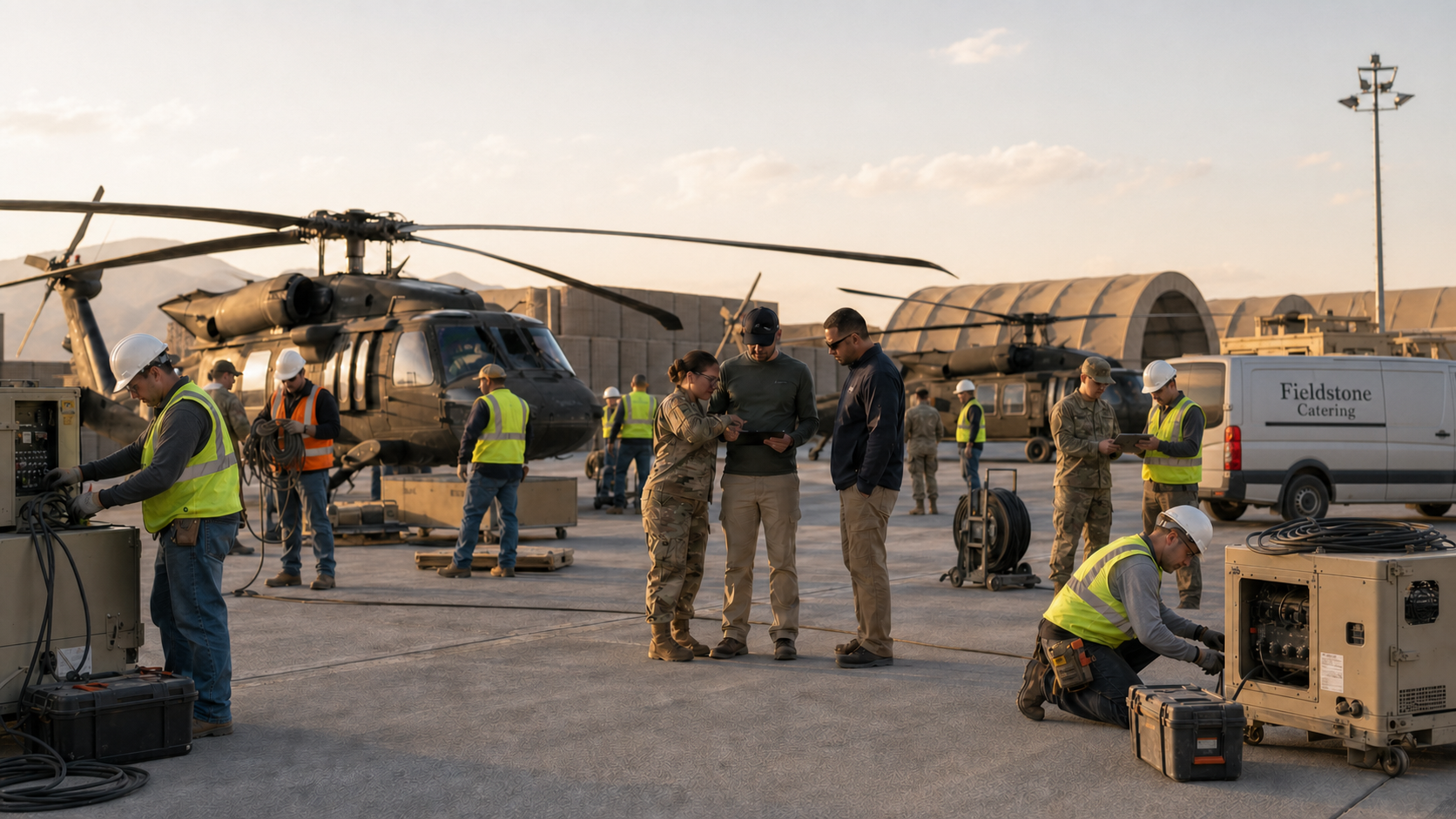




An assessment team changes its route after a bridge closes. A mobile service moves because local conditions have shifted. A distribution finishes late. Each event belongs to the same organisation, but the right response depends on people who understand the operating context.
The regional challenge is not merely to send the same message everywhere. It is to know whether people can be reached, direct information to the right country or programme, gather a useful response, and recognise when local capacity needs wider support.
Current quality and accountability standards recognise the leading role of communities in finding local solutions.1 Field-security guidance similarly says that plans must be adapted to each organisation and context, and that analysis should draw on local knowledge while remaining alert to bias.2 A useful duty-of-care model therefore needs a common operating structure and room for different decisions.
What should remain consistent across every country?
The common standard should define who owns duty-of-care activity, who reviews communications readiness, who may send a Mass Notification, who follows up a missed Check-In, and when an Incident Room should be opened. It should also set the approved channels, escalation route, regional reporting threshold, and minimum exercise schedule.
Those controls create consistency without dictating every local answer. Contact intervals, message wording, responsible roles, and practical response options can vary across road movements, mobile services, remote assessments, and distributions while accountability remains clear.
A common model should make responsibility visible across layers, while leaving decisions with authorised people.
How do Remits make responsibility visible?
A geographic boundary has operational value only when someone is responsible for what happens within it. AtlasNXT Remits connect an area with the authorised people who need to see and act on relevant information. The design can reflect country responsibility, field locations, programme areas, travel corridors, or another geographic structure approved by the organisation.
The organisation defines who watches routine activity, who can issue a notification or launch a Check-In, who receives a Panic activation, and who takes over when an event exceeds local authority or capacity. For a remote assessment, the country team may need the people travelling, planned area, expected completion time, and contact method. A regional leader may need to know that activity is overdue and support has been requested, without receiving every routine location update.
When routes, staff, or services cross a boundary, another authorised team can join under the approved procedure. Remits therefore keep information aligned with responsibility rather than distributing every event to every office.
How can ReachScore™ reveal readiness before an incident?
Reachability should be managed before a warning needs to be sent. ReachScore™ gives an organisation a practical view of whether a person's smartphone is ready to support AtlasNXT communications and location functions. It draws on exactly five signals: SMS availability, notification permissions, location access, recent device engagement, and battery life.
Each signal answers a different readiness question. SMS availability indicates whether that route is available for configured messaging. Notification permissions show whether the device allows app notifications to appear. Location access indicates whether the authorised location setting can support the relevant workflow. Recent device engagement helps reveal whether AtlasNXT has been used recently enough to give confidence in the setup. Battery life highlights a device that may soon become a weak point during an extended movement or disruption.
That matters in humanitarian operations, where teams may rotate between programmes, replace SIMs, use locally procured handsets, work through power cuts, share charging facilities, or spend long periods away from reliable mobile data. A readiness issue may be simple to correct on an ordinary day and extremely difficult to resolve once roads close or an incident begins.
Country teams can use the local view to help an individual restore permissions, confirm a number, open the app, or charge a device before deployment. An aggregated view can show regional leaders whether a pattern affects one office, one device rollout, or a wider group. Access to individual detail should remain aligned with authorised responsibility and the organisation's privacy rules. ReachScore™'s five inputs concern managed smartphone readiness. Satellite capability sits alongside the score as a separately configured communications option for people and teams operating beyond terrestrial coverage.
Where should local judgement shape the workflow?
Local teams know whether a delayed vehicle is following an accepted workaround, whether a distribution site remains usable, and whether a planned visit should pause. Field guidance recommends involving branch and response-team leaders in context and risk assessment because they face daily operational realities.3
AtlasNXT gives that judgement a defined place. The local operator can see relevant activity within the authorised Remit, consider ReachScore™ before movement, apply the current procedure, and record what has changed.
How should Mass Notification and Check-Ins work across country offices?
Consider severe weather affecting three country offices at different speeds. Before impact, local operators review ReachScore™ and address avoidable readiness gaps. Regional leaders see the aggregated pattern and confirm which Remits have sufficient local cover. When the threat becomes actionable, the responsible operator selects the affected Remits and sends a Mass Notification containing the instruction, the time it applies, and the next expected update.
Depending on the organisation's configured services and the needs of the audience, the operator can use SMS, push notification, email, voice, and satellite channels. The chosen route or combination follows the response plan, available equipment, and known communications conditions, with each channel assigned and tested deliberately.
The operator can then launch a Check-In asking for a defined response, such as safe, assistance required, or not in the affected area. Replies create an accountable picture. Non-responses become a focused follow-up list for the relevant country team, where the operating procedure may call for another channel, a manager, a partner focal point, or other local action. If the event widens, an Incident Room can keep notifications, responses, decisions, tasks, and changes with the incident.
Mass Notification provides scale, Check-Ins turn communication into reported status, and ReachScore™ exposes readiness before silence becomes ambiguous. Together, they help the organisation distinguish a message sent from a response managed.
How can location support local action without dominating it?
Location is most useful when it answers a specific operational question. Live location may support a defined period of Overwatch during a remote visit. Event-led location can add context after a request for help. A consent-based approach may suit another activity. A Check-In may be sufficient when the organisation needs a welfare response rather than movement history.
AtlasNXT can support live, event-led, or consent-based location where appropriate, while Remits help visibility follow authorised responsibility. The OECD Privacy Guidelines emphasise collection limitation, data quality, purpose specification, use limitation, security safeguards, openness, individual participation, and accountability.4 Each office should therefore define why location is needed, who may see it, and when its use ends.
How should partner teams be prepared and included?
Partner-led work tests whether the model is genuinely local. Research on security risk management in partnerships calls for transparent communication, shared risk ownership, and meaningful involvement of local partners in decisions about the risks they face.5
Onboarding should establish the relevant Remit, responsible focal points, consent and privacy arrangements, approved message routes, Check-In expectations, and escalation contacts. Where a partner uses the AtlasNXT app, the team can review ReachScore™ and resolve readiness issues during induction. Where satellite devices or other configured channels support remote work, those arrangements should be tested separately and reflected in the operating plan.
Partner personnel can be included where the relationship, permissions, and operating arrangement support it. Suitable authorised information can be imported or integrated when format, security, and approval requirements are met. Each organisation retains responsibility for its people and decisions, while the shared activity gains a clearer communication and escalation structure.
What should regional leaders see before and during an event?
Before an event, the regional view should show readiness trends, incomplete onboarding, local cover, and recurring issues across Remits. ReachScore™ helps leaders see whether an apparent regional capability is supported by usable smartphones at local level. That is a preparedness view, not a live welfare judgement.
During an event, the emphasis changes to the affected Remits, notifications issued, Check-In responses, unresolved assistance requests, resource needs, and decisions requiring wider authority. Country teams keep the operational detail. Regional leaders focus on material gaps and dependencies.
Wider coordination becomes valuable when an event crosses Remits, affects several activities, exceeds local capacity, or requires authority held elsewhere. Field-security guidance recommends agreeing triggers between in-country staff and headquarters before a crisis, while recognising that triggers vary by context and risk.2 Operational guidance also stresses defined authority and two-way communication between management, leadership, and response teams.6
How should the organisation exercise the model?
Test the full chain, not only whether a message leaves the system. Begin with a pre-event ReachScore™ review and include a changed SIM, disabled notification permission, low battery, and a partner who has not recently engaged with the app. Then introduce a warning across two Remits, send a Mass Notification through the channels selected in the plan, launch a Check-In, and require local teams to triage non-responses.
Continue the exercise until one office needs regional support and the response moves into an Incident Room. Review whether people received the right instruction, local operators understood the response categories, satellite arrangements were used as configured, regional leaders saw the right level of information, and the record explains the decisions.
Health and safety guidance on lone work reinforces the need for understood monitoring procedures, pre-agreed contact intervals, end-of-task confirmation, and regular testing.7 Readiness, notification, response, and escalation should therefore be rehearsed as one operating process.
One duty-of-care model can work across many country offices when it standardises responsibility and preparedness rather than flattening context. Remits establish who owns the geography. ReachScore™ shows whether smartphone readiness supports the plan. Mass Notification and Check-Ins connect warning with accountable response, and the Incident Room supports wider coordination when local action is no longer enough.
Book a Complimentary Consultation to explore how Remits, ReachScore™, Mass Notification, and Check-Ins could support local responsibility and regional oversight across your operations.
References
1. Core Humanitarian Standard, The CHS: Nine commitments to people affected by crises, 2024. View source
2. Global Interagency Security Forum, Security to Go: A risk management toolkit for humanitarian aid agencies, fourth edition, 2020. View source
3. International Committee of the Red Cross, Safer Access: Context and risk assessment. View source
4. Organisation for Economic Co-operation and Development, Privacy principles. View source
5. Global Interagency Security Forum, Partnerships and Security Risk Management: A joint action guide for local and international aid organisations, 2021. View source
6. International Committee of the Red Cross, Safer Access: Internal communication and coordination. View source
7. UK Health and Safety Executive, Lone working: Protect those working alone. View source