


What are the critical event management obligations for energy operators?
Energy operators in the UK face overlapping regulatory frameworks that collectively require credible incident response capability. The Health and Safety at Work Act, the Control of Major Accident Hazards (COMAH) Regulations for high hazard sites, the Network and Information Systems (NIS) Regulations for network operators, and the Ofgem NIS Guidance v3.0 published in January 2026 for downstream gas and electricity operators all create obligations that extend from detection through response to reporting and review.
The direction of regulation is consistent. Operators are expected to demonstrate not just that they have emergency plans, but that they have the operational capability to execute those plans under real world conditions. Critical event management (CEM) is the discipline and technology that bridges the gap between planning and execution.
Why is the energy sector particularly exposed to people-related CEM failures?
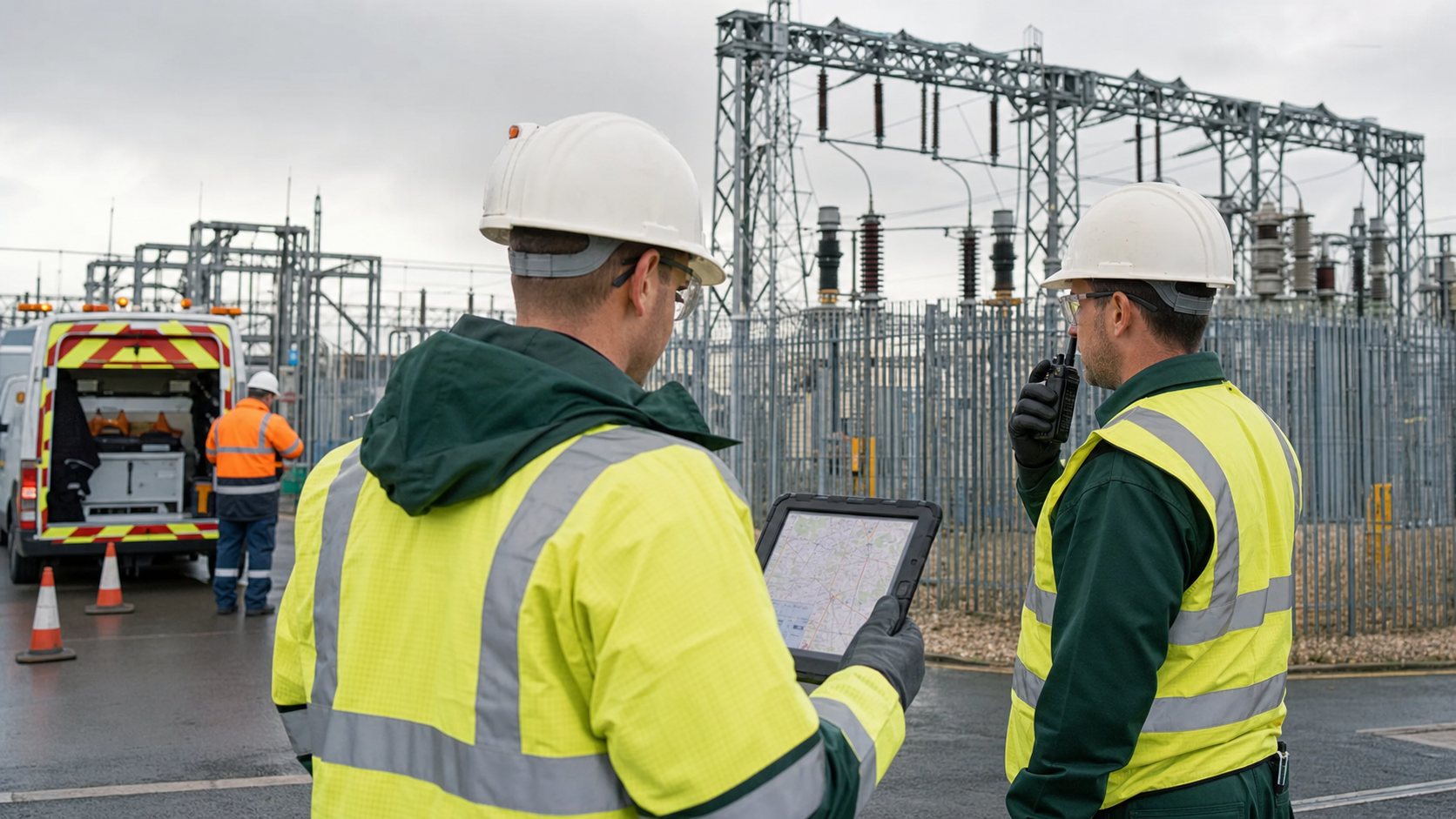
Energy infrastructure operations typically involve field engineers and maintenance staff working alone or in small groups at remote, high hazard locations: substations, power stations, offshore platforms, pipeline inspection routes, and wind farms in challenging terrain. These environments combine elevated risk with limited immediate access to assistance.
The duty of care for a lone worker or small team in a remote energy environment is demanding. Organisations need to know where those individuals are, be able to reach them instantly if a threat emerges, verify their welfare at regular intervals, and have a clear escalation path when someone cannot be contacted. Without a CEM platform integrating tracking, notification, and incident management, that chain of protection relies on manual processes that fail under pressure.
How does a Critical Event Management platform connect Operational Technology Alerts to the human response layer?
Energy operations generate significant volumes of monitoring data from supervisory control systems. Many critical events are first detected by technology, not people. The gap that most energy operators have not fully solved is the transition from a technical alert to a human response: getting the right engineer to the right location with the right information, while simultaneously notifying leadership, regulators, and affected communities.
A CEM platform that integrates with operational technology through webhook connections can receive an automated trigger from an OT alert and immediately open an incident, notify the relevant response team, begin tracking engineer deployment, and initiate the communication workflow, without requiring a control room operator to manage both the technical situation and the response coordination simultaneously.
What does mass notification mean for an energy operator during a major incident?
When a significant incident occurs at an energy site the notification requirement operates at multiple levels. Field workers and contractors on site need immediate protective action instructions. The wider workforce needs operational guidance. Executive leadership needs situation updates. Regulators need timely notification under NIS reporting obligations. In some cases, affected communities need public communication.
A CEM platform manages all of those notification streams from a single workflow, with confirmation tracking, non-responder escalation, and a complete record of every communication sent. The alternative is a response bottleneck that CEM is specifically designed to eliminate.
How does critical event management support energy sector regulatory compliance?
Regulatory compliance in the energy sector requires more than following the right procedures in real time. It requires demonstrating that those procedures were followed, documenting the timeline of events, and providing evidence of the response to regulators who may review it months later.
A CEM platform generates the compliance documentation automatically. The incident record captures the time of detection, the time of notification, the actions taken, the personnel involved, and the timeline of escalation and resolution. That record does not have to be reconstructed after the event, it is produced as the event unfolds.
What does good critical event management look like for an energy sector operations centre?
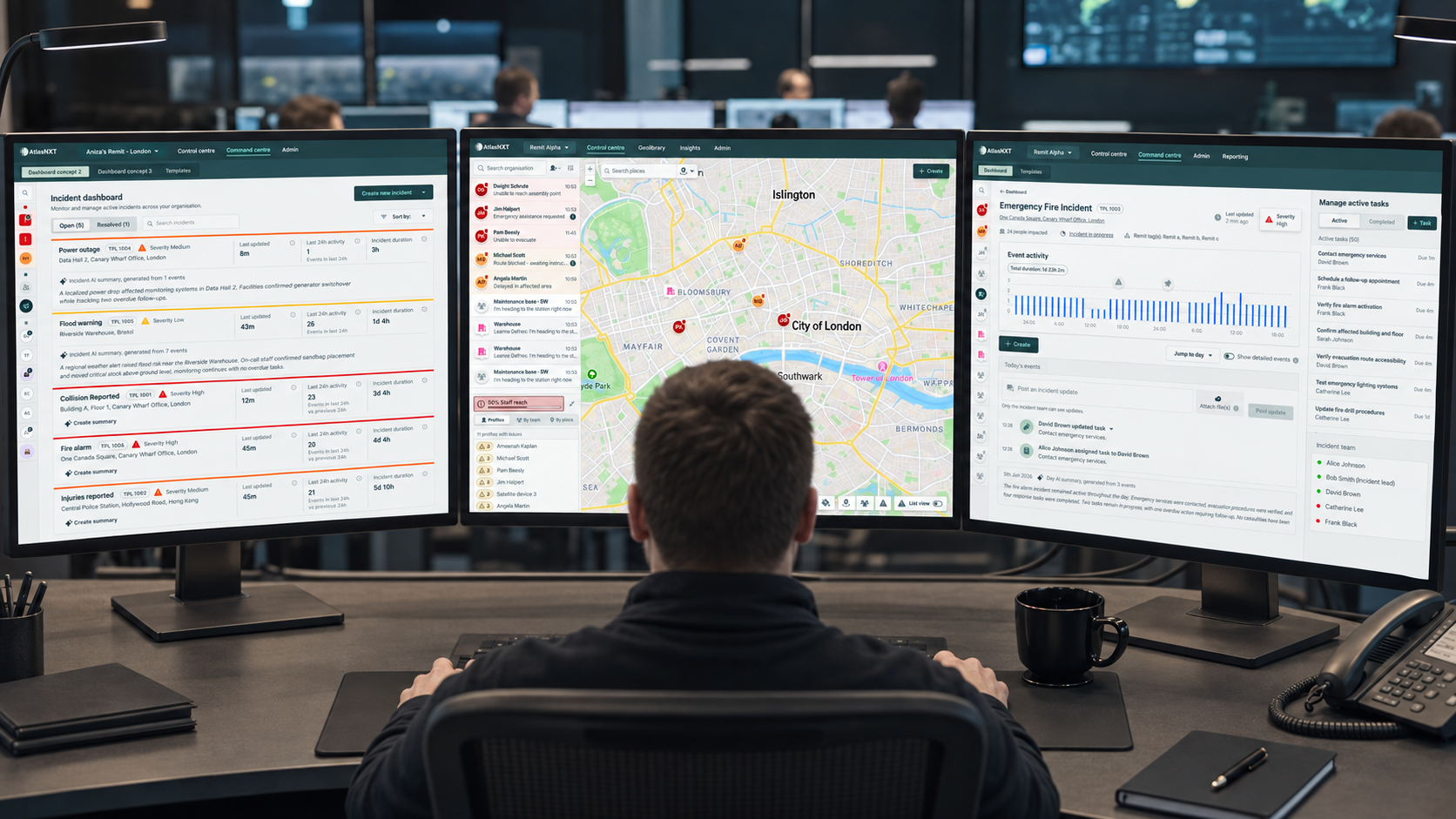
For energy companies with a global or multi-site security and operations function, CEM means the ability to maintain a real time operational picture across all sites, identify and prioritise incidents by severity, track the deployment and welfare of field responders, manage simultaneous incidents without losing situational awareness, and hand off between shifts without losing operational context.
AI-generated incident summaries in a modern CEM platform allow an operations manager overseeing multiple concurrent incidents to understand the current state of each without opening each individually, a capability that becomes critical when response resources are under pressure.
AtlasNXT brings together incident management, mass notification, and real time people tracking into a critical event management platform built for the high hazard, high-accountability demands of energy operations. Get in touch to see how AtlasNXT protects people when it matters most.