


How significant is the violence and abuse risk for retail workers in the UK?
The scale of violence and abuse directed at retail workers in the UK is substantial and increasing. The British Retail Consortium’s Retail Crime Survey 2024 recorded 1,300 incidents of violence and abuse per day, a figure that represents a significant increase from the 870 incidents per day recorded three years earlier. The survey covers incidents ranging from verbal abuse to serious physical assault, with the latter carrying the most significant consequences for staff welfare and for retailers’ legal obligations.1
The Health and Safety at Work etc. Act 1974 requires employers to ensure, so far as is reasonably practicable, the health, safety, and welfare at work of all employees. HSE guidance is clear that violence at work, defined as any incident in which a person is abused, threatened, or assaulted in circumstances relating to their work, is a health and safety issue that employers must assess and manage. For retail employers, this means identifying the specific circumstances and roles that carry the highest risk of violent incidents, and implementing controls that are proportionate to that risk.2
Which retail environments and roles carry the highest personal safety risk?
The highest personal safety risks in retail attach to specific circumstances rather than to retail as a whole. Staff working alone, particularly in smaller stores or during the early morning and late evening hours when customer footfall is low, carry higher risk than those working in well-staffed environments during busy periods. Staff who handle cash, operate self-service checkouts where disputes about age-restricted products are common, or who are responsible for refusing entry to individuals under the influence of alcohol face specific risk scenarios that require specific controls.1
Online grocery fulfilment drivers making household deliveries are effectively lone workers for the duration of their round, visiting addresses they have not seen before, often at times when the delivery locations are quiet. This population requires lone worker protection that is distinct from the in-store staff safety measures and that addresses the specific risks of solo visits to customer addresses.2
What are retailers’ obligations regarding lone working and out-of-hours staffing?
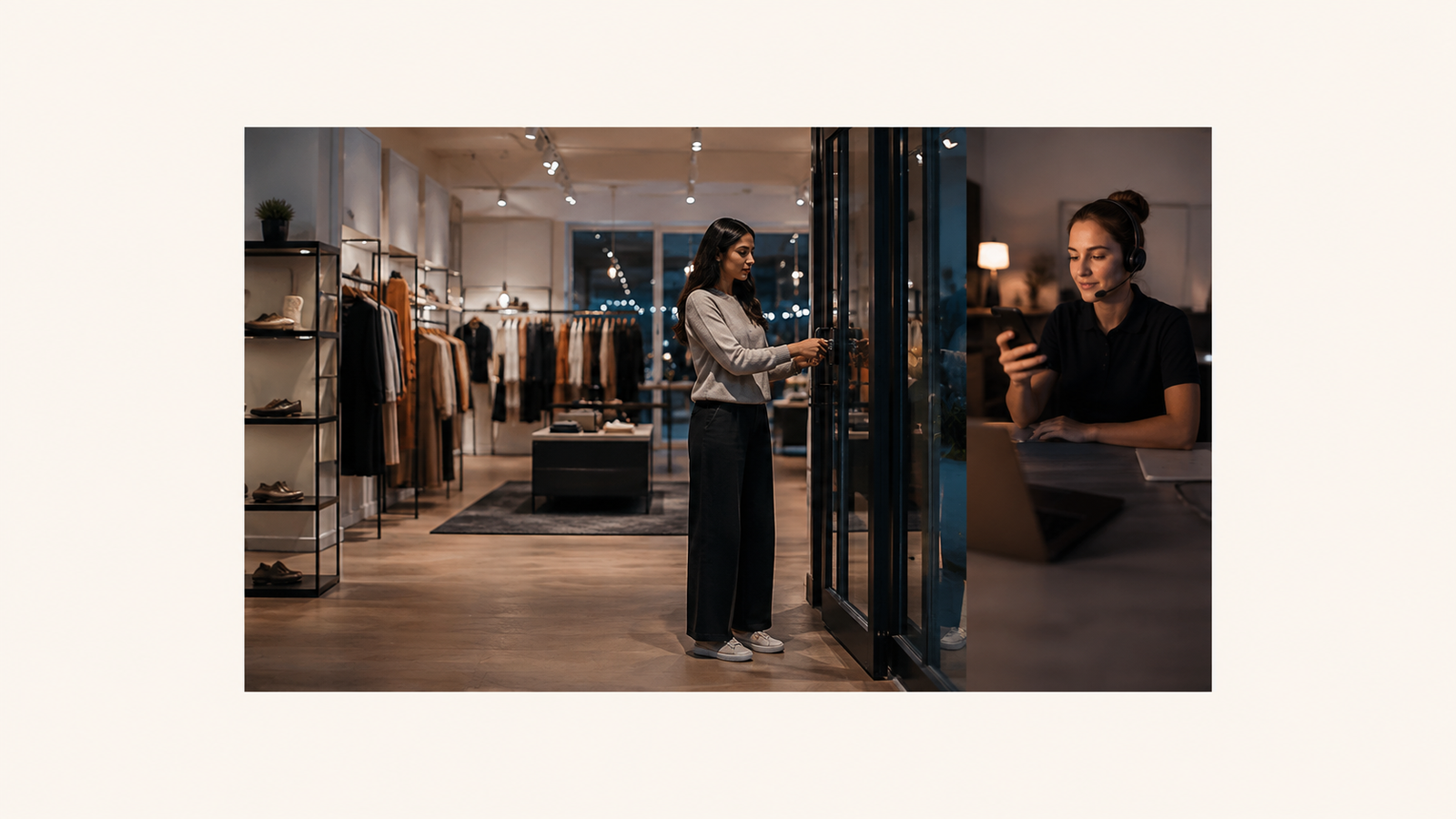
Retailers who staff stores with a single person, or who allow the last member of staff to lock up and leave alone after close, are operating lone worker scenarios that require explicit risk assessment and proportionate controls. The Management of Health and Safety at Work Regulations 1999 require employers to assess risks to lone workers and to implement controls that address those risks. For retail lone workers, particularly those closing a store, restocking overnight, or managing a smaller-format store during low-footfall periods, this means a check-in system, a defined escalation path, and the means to raise an alert if something goes wrong.1
The check-in procedure for a retail lone worker must function from the store itself, which may not have reliable mobile coverage in back-of-house areas. The alert mechanism must be operable discreetly, without requiring the staff member to make a visible or audible response in the presence of a threatening individual. These functional requirements rule out solutions that depend on the staff member being able to make a telephone call.2
How should retailers handle an incident where a store manager reports a security threat?
When a store manager reports a security threat, a threatening individual, a suspected robbery in progress, or an escalating situation that the store team cannot manage, the response must be immediate and structured. The store manager needs confirmation that the alert has been received and that the appropriate response is being initiated, which means emergency services have been called or are being called, and that someone senior in the business is aware and available.1
The escalation chain for a security incident must not depend on the store manager successfully reaching a specific individual by phone. A message sent to a single contact that is not answered leaves the store manager without the confirmation they need and potentially without the response the situation requires. The escalation must use multiple channels, reach multiple contacts in sequence if the first does not respond, and return a confirmation to the store manager that the alert has been received.2
How does AtlasNXT support staff safety for retail environments?
AtlasNXT provides retailers with a staff safety platform that covers in-store teams, lone workers, and mobile delivery staff through a single integrated capability. Its discreet alert function allows a staff member to raise a security alert without making the alert visible to anyone nearby, routing the notification immediately to the duty manager and the central security function with the staff member’s location. Its lone worker check-in capability supports the end-of-shift lock-up process and the online delivery round with a configurable check-in sequence and automatic escalation when a check-in is missed.
For the central retail security function, AtlasNXT’s real-time dashboard provides visibility of active alerts across the store estate, allowing the security team to prioritise and coordinate responses without requiring each store to contact the centre individually. Its communication record supports post-incident review, insurance reporting, and the HSE investigation documentation that a serious incident may require.
To discuss how AtlasNXT could support your organisation, book a Complimentary Consultation.