


What are UK local authorities required to do under the Civil Contingencies Act 2004?
The Civil Contingencies Act 2004 (CCA) places statutory obligations on Category 1 and Category 2 responders (including local authorities) to assess the risk of emergencies, put in place emergency plans, maintain business continuity arrangements, and communicate with the public and other responders before, during, and after an emergency.
For local authorities, this means having a credible capability to respond to anything from extreme weather events to major public safety incidents, civil unrest, or infrastructure failure. The obligation is not just to have a plan: it is to demonstrate that the plan can be executed when it matters.
How is LRF reform changing the expectations on local authorities?
The UK Government's 2022 Resilience Framework acknowledged that Local Resilience Forum structures have historically been inconsistent in both quality and capability. The reform programme responded with the Stronger LRF Trailblazers initiative, selecting five forums in April 2025 covering Cumbria, Greater Manchester, London, Northumbria and Suffolk. Grant funding followed in September 2025, and by mid-2026 four of the five Chief Resilience Officer posts were filled, with each trailblazer implementing dedicated plans to strengthen leadership, accountability and interoperability. The findings from these pilots will inform the ongoing Civil Contingencies Act review, with full national rollout targeted by 2030.
The direction of travel is clear: local authorities are expected to move from passive emergency planning towards active critical event management capability, with the systems, people, and processes to coordinate multi-agency responses in real time.
What does critical event management mean for a local authority?
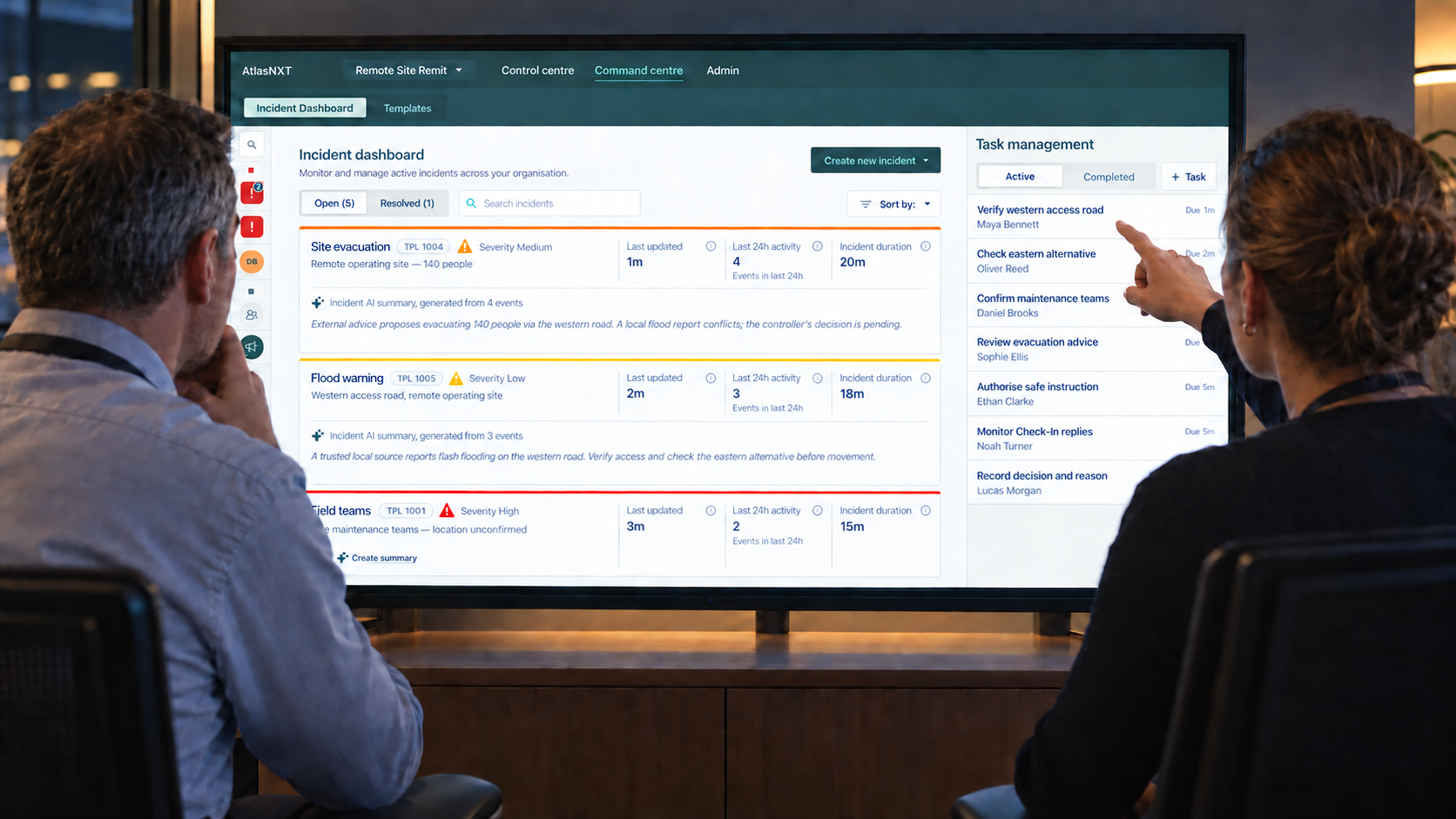
Critical event management (CEM) for a local authority is the ability to detect, assess, coordinate, communicate, and resolve a significant emergency from a single operational platform, whilst maintaining a complete and auditable record of every decision and action taken.
This requires three integrated capabilities that most councils currently lack in unified form: the ability to track and account for people, both staff deployed in a response and members of the public in affected areas; the ability to send mass notifications to large and defined populations; and the ability to coordinate the response through a structured incident management framework with clear command authority.
How does a council coordinate a multi agency response during a critical event?
The challenge of multi agency coordination during an emergency has been well documented in public inquiries. The JESIP principles provide a framework, but the tools to operationalise that framework in a live incident remain inconsistent across authorities.
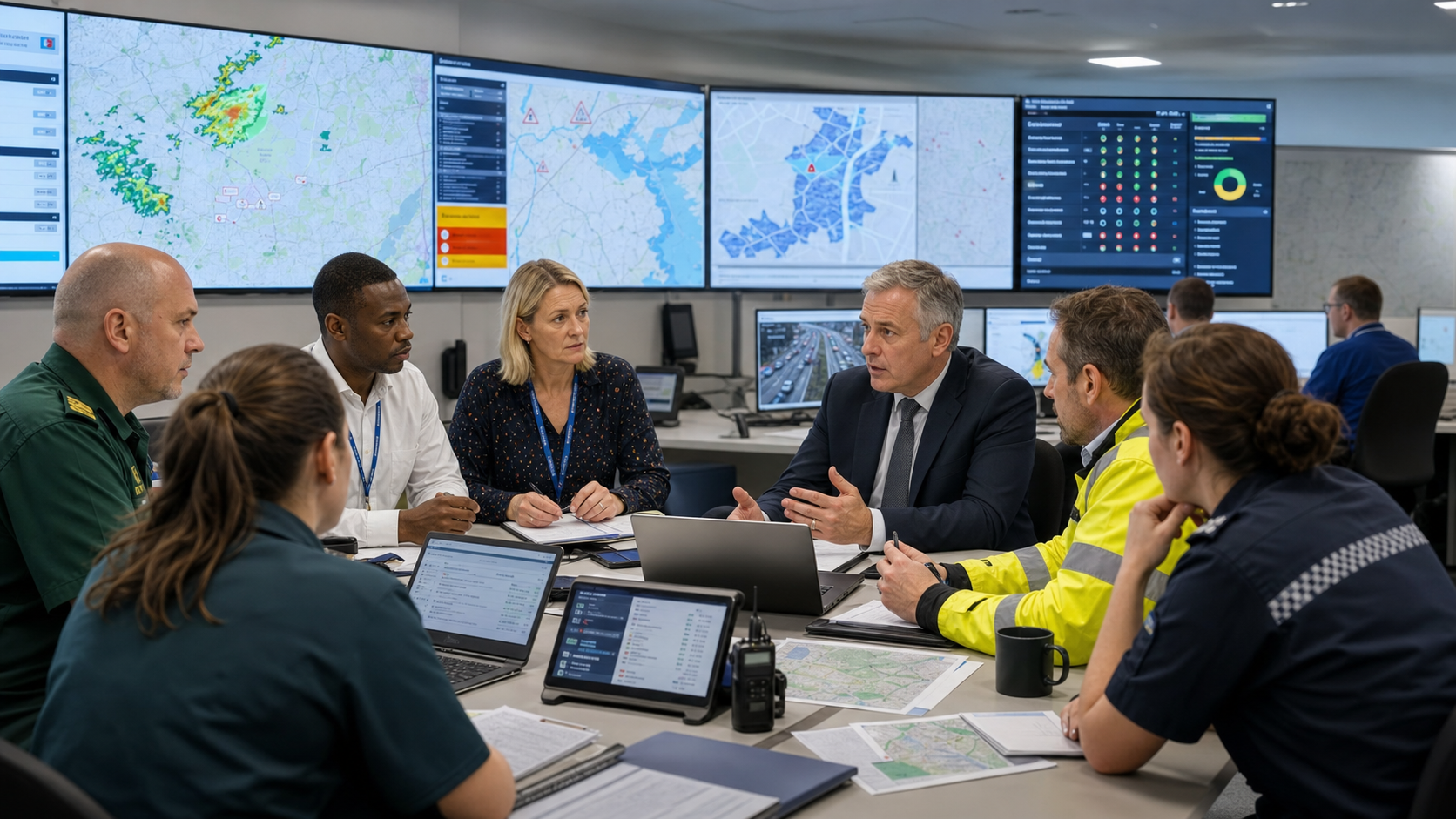
A CEM platform provides a common operating picture: a shared incident record that all authorised partners can access, that updates in real time as new information comes in, and that provides every agency with the same situational awareness. Rather than different agencies maintaining parallel logs and communicating through liaison officers alone, CEM creates a single source of operational truth.
What is the role of mass notification in local authority emergency management?
Mass notification is a statutory expectation under the CCA's community warning and informing duties but mass notification in isolation is not enough. The questions that matter during a critical event are: who received the message, who acknowledged it, who has not responded, and what protective action has been taken?
A CEM platform integrates mass notification into the incident management workflow, so that communication with the public and with deployed staff becomes part of the incident record rather than a parallel activity. This matters enormously for post incident review, public inquiry accountability, and continuous improvement.
What does the audit trail requirement look like for a council emergency response?
Every significant emergency involving a local authority will generate scrutiny, from overview and scrutiny committees, from public inquiries, or from HMICFRS inspection. The question that scrutiny always asks is: what did you know, when did you know it, and what did you do about it?
A CEM platform provides the answer automatically: a chronological record of every notification sent, every decision logged, every task assigned and completed, and every communication with partner agencies. That audit trail is not produced retrospectively: it is built in real time as the event unfolds.
How should local authorities make the case for CEM investment?
The case for CEM investment sits at the intersection of statutory obligation, reputational risk, and governance accountability. A council that cannot demonstrate credible critical event management capability is not just operationally exposed: it is potentially in breach of its CCA duties and vulnerable to significant reputational damage in the event of a public inquiry.
The cost of a CEM platform is a fraction of the cost of a poorly managed emergency. The regulatory, reputational, and human costs of the alternative are not hypothetical.
AtlasNXT combines incident management, mass notification, and real time people tracking into a critical event management platform designed for organisations with statutory emergency management obligations. As LRF reform raises the bar for local resilience, get in touch to see how AtlasNXT supports compliant, accountable, and effective emergency response.